



More and more people are paying more attention in everyday life to avoid plastic, to produce less waste overall and are looking for alternatives for non-environmentally friendly materials in the home. Baking paper, for example, is considered to be non-friendly and is one of the most widely used consumables in the local kitchen, along with kitchen rolls, plastic wrap and aluminium foil. Find out what green alternatives to baking paper are available to baking paper that achieve the same results in the oven in a more environmentally friendly and sustainable way.
1. Why baking paper is not environmentally friendly
Baking paper is an indispensable helper in the kitchen, preventing both dough and food such as pizza from sticking to the baking tray. The baking paper, as a base of infused in the oven, ensures that you do not then have to clean the entire oven and the tin of splashes or overflowing cheese.
When it comes to cooking and baking, conventional baking paper is a disposable item that usually ends up in the garbage after a single use – this causes a gigantic amount of garbage every year in households all over the world. Most people mistakenly believe that baking paper is paper. This is not only wrong, but also leads to incorrect sorting during disposal, which in turn prevents the desired recycling.
Unlike a newspaper, baking paper is only partially real paper. As a rule, a thin layer of silicone ensures that nothing adheres to the baking sheet or burns in. This in turn means that used baking paper does not belong in the paper waste, but has to be disposed of in residual waste.
If you want to avoid a large amount of garbage without much effort, then you should look for a replacement for baking paper. The choice is larger than you think, the changeover does not require much effort and hardly costs.
2. Green alternatives to baking paper
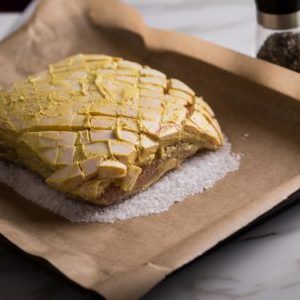
Good alternatives to baking paper are permanent baking foil, silicone mats and butterbread paper.
The switch to alternatives to baking paper is not only sustainable, simple and environmentally friendly, but also permanently relieves your wallet. We would like to present the best alternatives to you below:
- Grease of baking blobs and moulds
- Switching to baking paper without coating / silicone-free baking paper
- Butterbread paper and vegetable oil as a baking paper alternative
- Permanent baking film / silicone baking mat
- Permanent baking film made of glass fibre
- Baking sheet made of glass
- Bricks made of cordierite
We now look at the pros and cons of each alternative so that you can find your personal favorite.
2.1. What your grandmother already knew
Our grandparents knew alternatives to baking paper decades ago, when the disposable item was not yet invented. Both sheets and baking and filler moulds can be coated with butter or a tasteless vegetable oil, so that no dough sticks to it. In case of upsands, you can also use taste-intensive oils such as olive oil or walnut oil, which contribute to good taste.
Simply brush the entire mould or tin and bake bread, cakes, cookies or wholetopies. The downside is that they use the food butter or vegetable oil, which has consumed resources during production and should actually be consumed.
2.2. Combine butterbread paper and vegetable oil
With this version, you can’t completely avoid garbage, but you’re working much more environmentally friendly. Important: Use uncoated butterbread paper, otherwise you will not have achieved anything. Cellulose-based butterbread paper is free of chemical additives and should be thinly coated with butter or vegetable oil before use.
The disadvantage of this variant is that they waste food that has used up resources in their production, and the bread paper ends up in the garbage after use.
2.3. Permanent baking mats or silicone-based baking foils
Baking without baking paper is particularly environmentally friendly and easywith this alternative. The thin silicone mats can be used again and again, but should remain in the oven without food for about four hours before first use at 200 °C. Thus, any existing substances evaporate due to evaporation and cannot cause any health damage. Afterwards, the material convinces on the whole line.
It can be used in the oven at up to 230 °C, but can also withstand minus degrees effortlessly. After use, the mats can be used again.
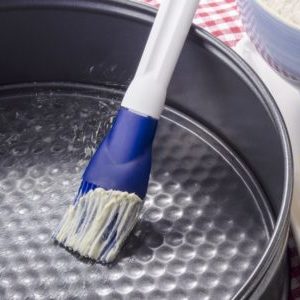
Often it is enough to grease baking tins if baking paper is to be dispensed with, as one of the traditional green alternatives to baking paper.
Wipe the wax cloth or simply put it in the dishwasher. Not only can the mats be useful as an alternative to baking paper, but they provide excellent serviceseven before baking when rolling out and kneading dough. The only drawback: Silicone is hardly recyclable, which is why worn-out silicone mats cause garbage.
2.4. Permanent baking films made of glass fibre
Long-lasting baking films made of glass fibre mesh are silicone-free, but coated with PTFE, which is more common to many under the term Teflon. The films can withstand temperatures of up to 260 °C effortlessly and can be reused hundreds of times.
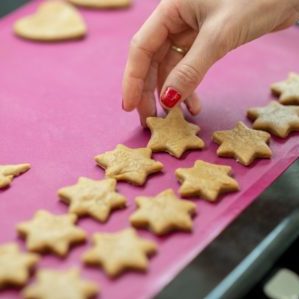
Silicone alternatives can withstand high temperatures in the oven effortlessly.
In contrast to silicone, we have not found any information about the evaporation of the ingredients, which probably makes these mats even more powerful and sustainable than silicone mats. The only drawback here is that the films can only be recycled poorly or not at all.
3. How quickly do green alternatives to baking paper pay for themselves?
For the simplest silicone mat, you have to expect a cost of just over $10. Since cheap baking paper in eight metres in length costs around $2, the purchase would have already been calculated after saving five packs of baking paper. So green alternatives to baking paper start to save you money very quickly too, as well as saving the environment.
