



How can you tell the difference between a fake or genuine bottle of wine? Our guide explains the things to look out for to avoid counterfeits.
Find more Fake Check guides, tips and advice
As with all collector’s items, fakes are not uncommon in the world of wines . Have you discovered a beautiful bottle of Grand Cru online and are now wondering whether the fine wine is real?
Counterfeiting and fraud take place in different ways
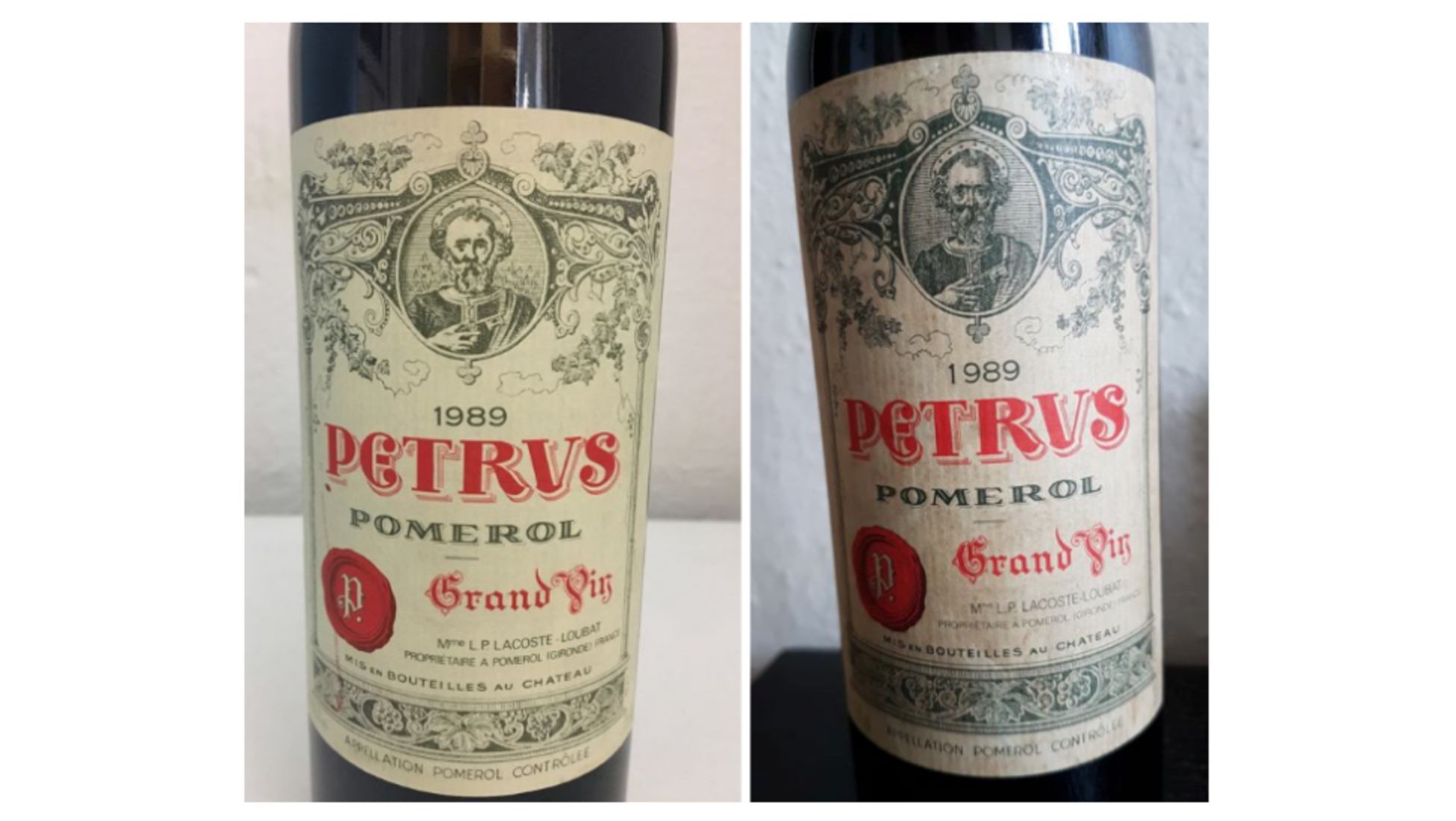
In the image above, the left bottle is the real Petrus 1989, the right bottle is a fake. The black ink used is too dark, the paper texture is different and the logo is messy.
Since there are numerous ways to counterfeit a bottle of wine , it can sometimes be difficult to tell whether it is genuine or fake. It can take years before a good counterfeiter is discovered, especially with bottles that go straight from the seller to the wine cellar. You have to know that there is a lively market for empty, original bottles, labels and even corks.
Original bottles that have been refilled are usually particularly difficult to recognize. But there are also some very well-made new counterfeits on the market. So well done that one can assume that they are from organized crime circles.
Organized crime, honestly? Yes indeed. In February 2019, Europol announced that it was successfully investigating a “sophisticated criminal network responsible for forging labels from a famous winery in Florence (Italy) and at least 11,000 bottles of red wine”. This “wine mafia” worked on a large scale. During a search, at least 3,000 corks and 10,000 laminate closures were found, as was a filling and capping machine.
Fortunately, not all counterfeiters have such equipment. “There are also self-made fakes; with copied labels and dirty capsules. These are easy to spot. And then there are those who have been manipulated by inserting a needle through the capsule and cork. This happens quite often. So without opening the bottle, the contents are changed or wine [removed or added to improve the quality]. “
The measures of the wineries
So now we know which ways to cheat. But what are the wineries doing about counterfeiting? The Château Pétrus uses a special pattern on the label for its new bottles. This can only be seen with a special light source. Holograms, such as those used on banknotes, can also be an option. Other wineries use labels with a QR code on the bottle. This enables buyers to understand the path of the bottle: from the approval of the winery, from which dealer it was bought and to which customers the dealer sold the bottle.
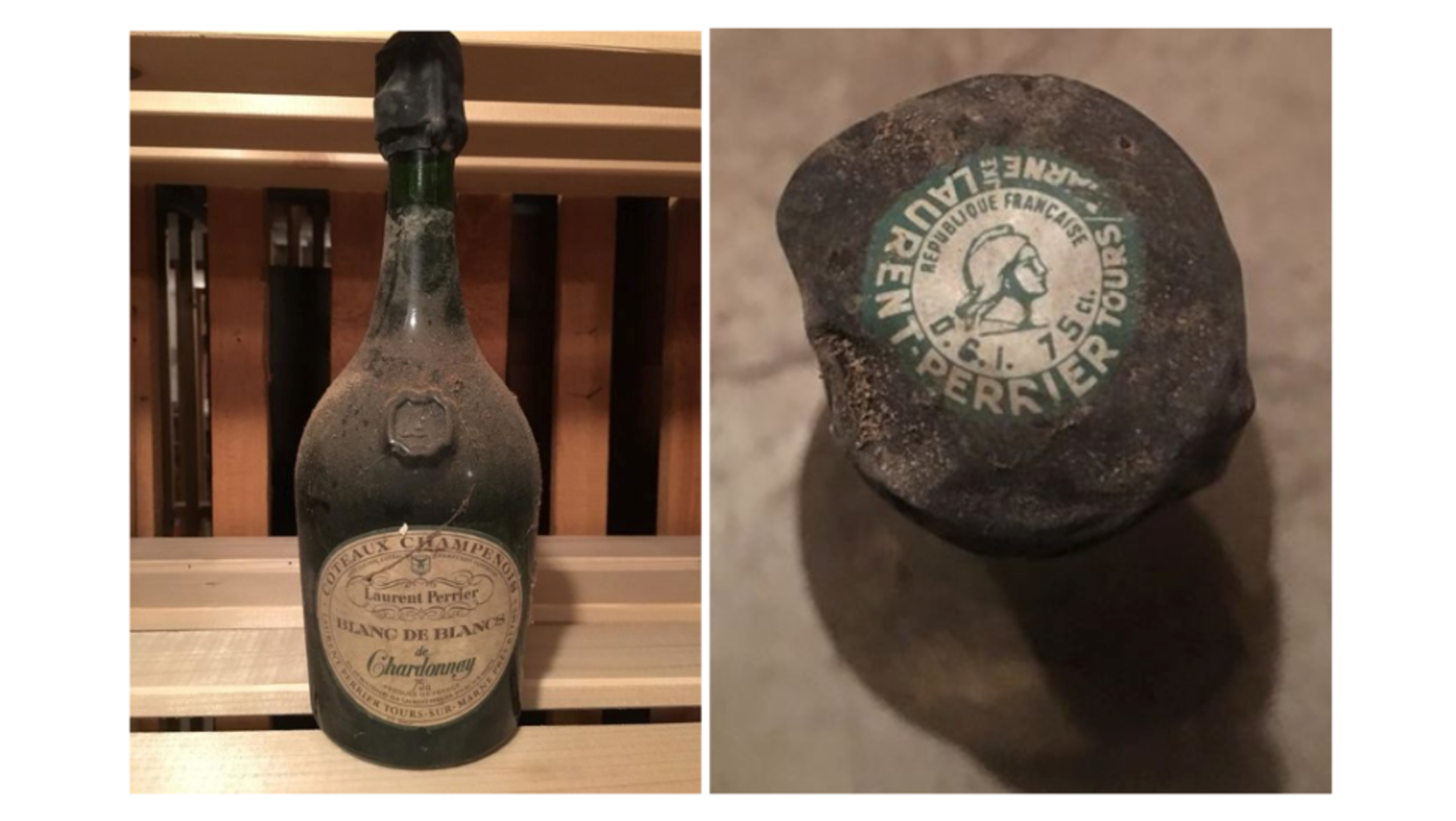
The seller of this bottle, Laurent Perrier – Coteaux Champenois Blanc de Blancs, claimed that it came from the Second World War. The tax stamp on the capsule was not introduced until 1960.
It’s not just the wineries that take action against these fraudsters; there are also some “detectives” in the wine world. Famous American wine detective Maureen Downey helped track down the forger Rudy Kurniawan, who is still in prison today. He was the first person convicted of wine fraud.
Kurniawan sold $ 24.7 million of wine in just one auction in 2006, more than double the previous record. But when he started selling Clos St Denis from Domaine Ponsot between 1945 and 1971, his reputation began to crumble. This special wine has only been made since 1982.
Bill Koch, the multi-billion dollar wine collector, discovered another trickster: Hard Rodenstock. Rodenstock made it to dubious fame when he sold a 1787 Chateau Lafite to an auction house for $ 150,000 and claimed the wine was owned by former US President Thomas Jefferson. Koch, who paid another $ 311,804 for four more bottles of this wine, hired a private investigator after the origin of the bottles could not be confirmed, who in turn found that the wine was no older than 1962. An indication of the investigation were also the empty bottles, empty wine labels and corks that could be found in the Rodenstock house.
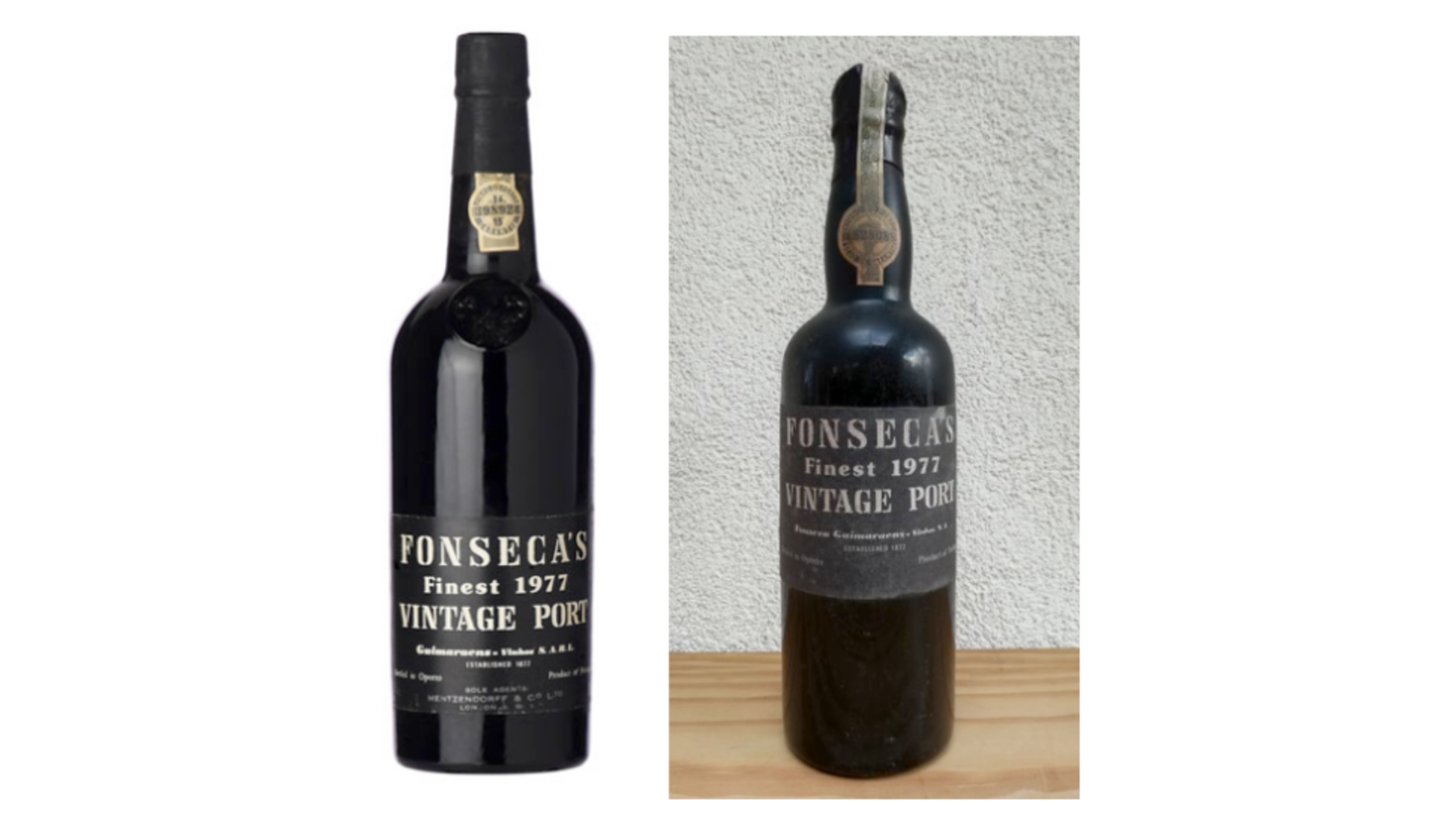
There is a real bottle on the left and a fake on the right. It can be seen that the left bottle has a metal capsule and a “modern” paper seal. The right bottle has a modified wax capsule and an old paper seal, among other things with incorrect information.
Questions to tell a fake or genuine bottle of wine
There are a few things to consider. But you can find out if a bottle is real. We have listed a few questions you can ask yourself and the seller to determine if a bottle is real or if you may be cheated:
1. Are the layout and design of the labels correct?
2. Are the capsules still intact and do they look like the original capsules?
3. Do the corks on the side have the original stamp of the winery?
4. Does the bottle shape and glass type match the original bottle?
5. What is the provenance of the bottle?
It is also important to find out for yourself what the wine you want to buy should look like and whether its story sounds plausible. You shouldn’t buy expensive wine out of a gut feeling, but get detailed information” This way you can protect yourself from possible disappointments.
