



Removing old wallpaper from drywall can be a difficult and messy task. Our step-by-step guide shows how to remove wallpaper easily from drywall.
Creating dry-construction walls – with plasterboard or gypsum fibreboard – is now part of every homeowner’s extended self-make repertoire. The great advantage of both types of panels is that you can very quickly create an ideal substrate for the following wall coverings such as tiles, paint, plaster or wallpaper.
The situation is slightly different if you want to change the topping later. This is especially true for the combination of wallpaper and plasterboard. The problem: In order to remove the wallpaper, you have to tear open the surface and loosen the wallpaper paste behind it with strong water.
This is precisely what does not work for the moisture-sensitive cardboard and gypsum components. Our tip is therefore to roughen the surface with 80s sandpaper instead of using the tiger claw and to dose the water with the spray bottle instead of watering. After a short change time (one minute) all types of wallpaper,although not in one piece, can be removed quite well and quickly.
You can repair any faults or damage in the cardboard surface with plaster mass before the next tapestry. With the gypsum fibreboard, this all looks much better. The use of a tiger claw to perforate the wallpaper is possible here, but rarely necessary. All types of wallpaper can be easily peeled off from primed and unprimed gypsum fibreboards.
How to use peel and stick wallpaper
Remove wallpaper: plasterboard vs. gypsum fibreboard
Basically, according to our experience and tests, you get every type of wallpaper from gypsum fibreboard down better than from plasterboard. This is due to the fact that the gypsum fibreboards are already provided with a primer from the house, so the penetration depth of the paste is limited. In addition, the surface structure of the fiber-reinforced plaster is slightly denser and harder than cardboard, so the wallpaper is easier to separate from the substrate.Gypsum fibreboard, however, has the disadvantage that the joints have to be spat on very carefully and planically, because they must not be sanded after drying. It is therefore easier to glue the joints.
When is a primer really needed?
Basically, before every wallpapering: With a good primer of the wall you can save yourself a lot of time and trouble during a later wallpaper change. Plasterboard must be primed, it helps with gypsum fibreboards, but is not absolutely necessary. Since you have to treat the plasterboard with a deep ground anyway in order to match the different suction behavior of the cardboard and the joint compound, you can also immediately fall back on a tapestry or wallpaper change background. The low ground is the same as it is.
Remove wallpaper from drywall easily: step-by-step

It is best not to use a tiger claw when removing wallpaper from drywall, as the tool can damage the drywall surface.
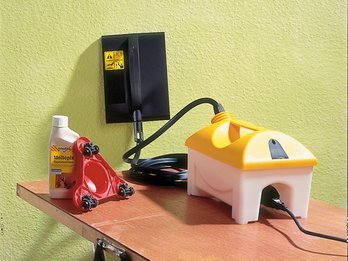
Don’t use a steamer, either. It will not only dissolve the wall per, but can start dissolving the core of the drywall.
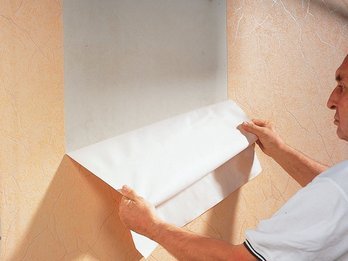
This is how it should be: From a well-grounded plasterboard, all types of wallpaper can be removed in one piece.
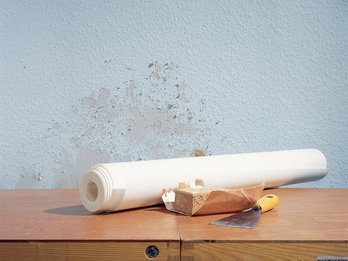
Here’s how it works: Just leave the rough fibre on the wall, grind the coarsest grain and stick a fleece wallpaper over it.
