
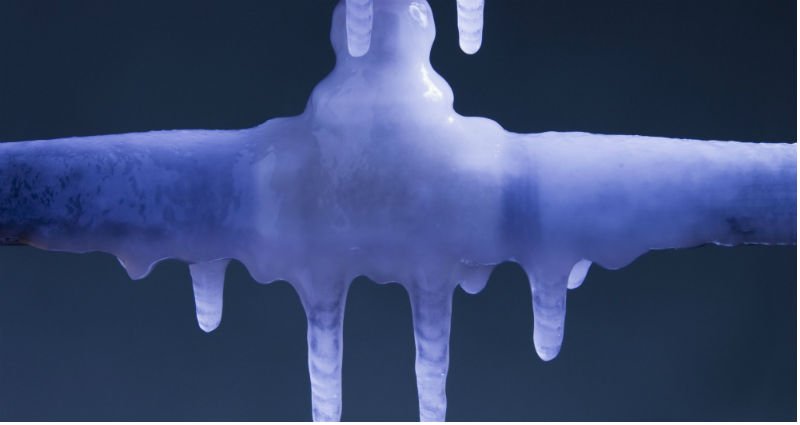



A water pipe break is more than annoying and not only costs time and money, but also nerves. We outline how you can optimally prepare the outdoor water pipes for winter and prevent a frozen water pipe.
The problem is not necessarily the cold, but the water: Freezing water expands, everyone who has forgotten a bottle of beer in the freezer knows that.
Although plastic, from which many cables are made, is flexible to a certain extent , this flexibility decreases at cold temperatures . In addition, lines also become more porous over time – after 20 years , according to the rule of thumb, the first damage can be expected. Reason enough to secure the water connection in the garden and prevent a frozen water pipe.
Make the water connection winterproof
So in order to prevent a frozen water pipe at an early stage, the easiest way is to drain the water from the pipes before the first frost. To do this, proceed as follows:
- Close the shut-off valve for the outside water pipe.
- Turn on the tap in the garden and let the water run until nothing comes.
- Open the drainage valve, which you can find directly at the shut-off valve, and use a bucket to catch the remaining water in the pipe. You can leave the drainage valve open during the winter so that water can flow out of the pipe in any case. To do this, leave the bucket under the valve and check the valve regularly so that you are not surprised by a flood.
- If you want to be on the safe side, you can then blow through the pipes with compressed air so that the pipes are guaranteed to remain frost-free.
Frost protection for the water connection
You can protect the tap against frost by wrapping it with foam or rock wool . For the water connection in the winter garden or in the garage, this is often sufficient as frost protection. To do this, however, the rooms in question must remain reliably frost-free. When in doubt, it’s better to be overly cautious than having to deal with broken cables in the end. Also keep the pipeline in mind.
For all those who also need water outdoors in winter, special frost-proof taps are recommended, These have a volume compensator that automatically balances the pressure with ice and water. Special heatable pipes can also be a solution in special cases. However, they are significantly more expensive than conventional pipes.
Ideally, to prevent a frozen water pipe, you should keep the frost protection in mind when laying the water pipes and lay them at a depth of at least 1 meter. Lines that run above or directly below the earth’s surface or along house walls must therefore be insulated. Preformed sleeves made of foam are particularly suitable for this purpose.
You have a frozen water pipe – what now?
If the water pipe is frozen , caution is advised: You can carefully thaw the pipe again with a heating pad, hot cloth, fan heater or hair dryer. Under no circumstances should the water pipe be heated too quickly, otherwise the temperature differences could cause it to finally burst.
Close the main valve of the pipe and open both the tap and the drain valve. Thaw the tap and line carefully with the means mentioned and make sure that the resulting humidity can move outside so that no mold is formed.
Whether there is a frost-related water pipe rupture, you can check by closing the tap, opening the valve again and observing the water meter: if this shows consumption, it means that water is leaking from one point of the water pipe. In this case, close the valve again and call a specialist.
