
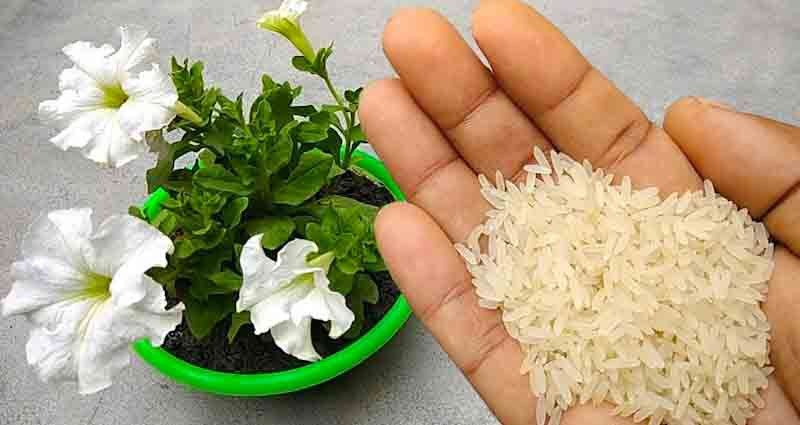


If you want to keep houseplants alive in the long term and let vegetables and herbs grow better in greenhouses or beds, you should find out about natural fertilizers. A natural fertilizer provides the plants with important nutrients, loosens the soil, increases the health of the plants and usually also the yield.
Read in our guide what is suitable to make natural fertilizer in the household and how you can make fertilizer yourself.
1. Natural fertilizer is important for plant growth and health
Have you ever wondered why your houseplants simply don’t look good after a few months, stop flowering or stop growing? Have you noticed in the garden or in the greenhouse that the tomatoes are getting less and less or herbs just look sad and dry? If simple watering does not improve the situation, then you should definitely fertilize the soil. The different plants all need Sun and water to grow – but the important nutrients from the soil play at least as important a role.
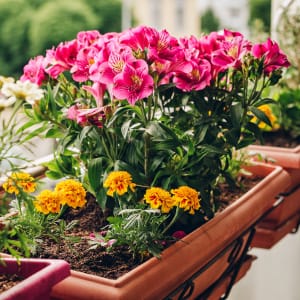
Pay attention to the specific needs of each plant.
Those who compost in their garden have a great stock of high-quality, natural fertilizerfor their plants. So it is a great advantage to your garden to create your own compost pile. But if you live in an apartment and just want to fertilize houseplants and the plants on the balcony like the tomatoes, you can also do your plants a favor with these five nutrient suppliers:
- Grounds
- Hair / Horn shavings
- Eggshells / Eggshell Water
- Beer
- Potato water
1.1. How coffee grounds also make your plants cheerful
Before you look for recipes to make natural fertilizer yourself, get to know your coffee grounds better. Coffee not only makes people cheerful – the remnants of freshly brewed coffee also stimulate the metabolism of the plants. The more active the metabolism, the better the plant grows.
As a natural fertilizer, coffee grounds provide nutrients such as potassium, phosphorus and nitrogen. Let the coffee grounds dry well so that there is no mould in the pot before mixing the coffee grounds under the plant soil or scattering it all around. As an alternative, you can also mix the dried coffee grounds directly into the water and thus introduce it into the soil.
Do you not drink coffee, but prefer tea? Then use the tea leaves in the same way, which also contain important nutrients.
1.2. Use hair and nail cuttings to make natural fertilizers
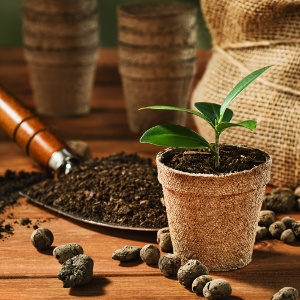
Natural fertilizer provides your plants with important nutrients for growing.
What is often left only as a disturbing accessory in the bathroom can be used excellently as a natural fertilizer. Beard stubble, long hair in the brush or even the combed fur of your pet contain a lot of nitrogen. Horn shavings from claws or your fingernails are similarly structured and can therefore also be used for fertilisation. As part of the decomposition, other minerals are released to help the plant grow. To fertilize, simply cut the hair very small or mortar horn shavings very finely and mix them under the ground. But beware: it takes a while for the effect to begin, because the decomposition process is slow.This method is particularly recommended for orchids and slow growing greenhouse plants.
1.3. Do not throw away eggshells but use them as a natural fertiliser
If eggshells are regularly used in many households after baking or enjoying breakfast, you will find a great re-use as a natural fertilizer. A large component of eggshells is lime, which is a particularly good fertilizer for acidic soils. The lime neutralizes the acidity in the soil, increases the PH-value of the earth,which in turn facilitates nutrient absorption. Chop the eggshells as finely as possible with mortarors or meat crates and mix them under the water. The eggshell water should pass through for about 12 hours, because the shells release the lime to the water, which can then penetrate well into the plant soil.
1.4. Stale beer
Believe it or not, the rich nutrients of beer can serve your plants as a natural fertilizer. But don’t put your savoury or stale beer in the flower pot or greenhouse. Mix it with water at a ratio of 1:2 and pour it once or twice a month. Their plants live longer and bloom more intensely. Beer is particularly popular with all room and garden plants that enjoy plenty of fresh air and plenty of sun in their location.
1.5. Use potato water only if it does not contain salt
If you cook potatoes without salt or broth, then it can be used excellently as a natural fertilizer. This is the case, for example, with the preparation of pellets. Simply allow the potato water to cool completely and then pour your plants directly with it.
When cooking, the potatoes release many minerals and vitamins to the water, which the plants are happy about. Once a week, the plants tolerate potato water. Never use salt water, as salt takes nutrients from the soil in the long run and therefore benefits rather than benefits.
2. When to use natural fertilizer
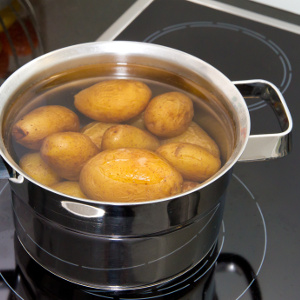
Plants benefit from the nutrients in unsalted potato water.
It is well known that plants sprout and flower in spring, bearing fruit and flowers in summer before starting to prepare for winter in the direction of autumn. This means in concrete terms for the fertilisation period: between March and September, you should fertilise your plants. Because whenever the plant grows, flowers or bears fruit, it needs more energy, water, sun and also nutrients..
3. Why natural fertilizer is good for plants, the environment and yourself
Natural fertilizer is often referred to as organic fertilizer. The alternative is synthetic or mineral fertilizers. Natural or organic fertilizer is obtained from renewable raw materials. Mineral fertilizer, on the other hand, is industrially produced and is an artificial fertilizer. Whereas organic fertiliser is based on compost, barn manure, vegetable substances or other natural products, mineral fertilizer relies, among other things, on various salts. Fertilization with industrial fertilizer therefore affects the entire soil in some cases very much. You have this danger with organic fertilizer. In addition, unlike industrial fertilisation, it also saves money.
4. Important questions and answers about natural fertilizers
Do you always have to make natural fertilizer yourself or can you buy it?
Natural and harmless fertilizers do not necessarily have to be made by yourself. Especially when you can neither compost nor make jauche, there is also organic fertilizer to buy in garden centers. Horse manican can be taken with you to farmers in small quantities if you ask kindly.
Is natural fertilizer suitable for every plant?
Natural fertilizer is generally not harmful to any plant. An exception applies only to vinegar. However, houseplants, vegetable plants or ornamental plants sometimes have very different preferences and needs. You can find out this through a short internet search. Use the recommended nutrients as fertiliser.
