



Bees are of immense importance to the ecosystem. They collect pollen and pollinate the plants at the same time. In this way, they allow fruit and vegetables to end up on our table in the first place. Without bees, therefore, there would not only be no honey, but also considerably less food. But bees need the nectar of plants to survive. Our guide shows how to grow bee-friendly plants and other ways to help bees thrive.
1. Why is it important to grow bee-friendly plants?
Bees play a crucial role in our ecosystem.In addition to some other insects, bees, which also include wild bees, are among the most important pollinators, along with bumblebees.
Without the active animals, which pollinate entire areas for their honey in search of nectar and pollen, the variety of fruits and vegetables on the human diet would not exist.
Modern agriculture in particular is causing problems for bees. As more and more weedkillers and pesticides are sprayed in the fields, bees are also burdened by this.
Read here what puts bees and other insects at the most risk:
- Toxic chemicals that destroy the food base.
- Monotonous agriculture, which also does not provide a food source.
- Destruction of habitats, even in native gardens.
- Diseases mainly affecting bred honeybees.
2. The responsibility of each individual
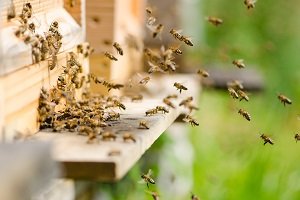
Bees are threatened with extinction by environmental toxins.
Although individuals cannot intervene directly in all processes, it is still important that they contribute to the conservation of bees.
Bee deaths and insect deaths in general are considered to be a major problem, but targeted action must be taken. This can be done above all with practical ideas such as bee plants.
Bee-friendly plants and shrubs in the garden or corresponding flowers on the balcony contribute directly to the bee help. In this way, you create a small oasis with suitable balcony plants and other insect-friendly varieties for the useful animals.
3. How to grow bee-friendly plants
Good to knowIn the meantime, you can already recognize bee plants by the name. Shops put appropriate signs on the flowers and plants.
Not everything that has colorful flowers is also suitable as plants for bees. In addition to actual bee plants, there are also varieties that look beautiful but have no added value for the animals. To avoid such plant species, read our guide and learn what you can do especially in spring and autumn for bees.
3.1. Focus on bee-friendly plants
In the garden centre or flower shop there are countless flowers and shrubs to buy. Some of them have colorful flowers, others do not. But the distinction between which variety is bee plants is not always easy.
Some shops therefore place helpful signs on the flower pots and shelves that explicitly identify bee-friendly plants. Flowers for bees are characterized by the fact that they are rich in pollen and nectar.
Only such plants provide the industrious pollinators with sufficient food. So-called filled flowers, which are intended exclusively for decoration, should be avoided at all costs.
The colorful colors attract the insects, but have nothing to offer the animals. Flowers with filled flowers include geranias or roses.
3.2. These plants are particularly suitable
In order to help the bees all year round, you should above all bring variety into your garden. It is ideal if you have the right flowers for every season, so that bees and bumblebees can still find nectar and pollen in spring as well as autumn.
So the little hummers are especially happy about crocuses, which bloom very early. But also to grow bee-friendly plants, there are summer flowers such as bellflowers, marguerites, lion’s mouths or sunflowers attract many bees.
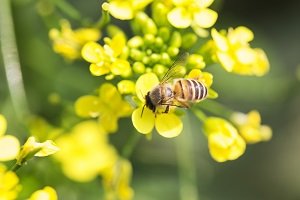
Bees like flowers with lots of pollen and nectar.
Lavender is particularly popular, which supplies not only wild bees and bumblebees but also butterflies. But not only beds or potted plants delight the animals, also shrubs and fruit trees are welcome.
Slime, raspberry bushes and fruit trees such as apple and pear trees offer a suitable food offer and hiding places with their flowers.
Also some herbs are excellent for bees. Especially sage, thyme or rosemary are very popular with bees.
4. What else you can do for bees
In addition to a bee-friendly planting of your garden or a nice selection of insect-friendly balcony plants, you can do even more for the useful animals. Based on our table, we show you suitable measures for each season.
| Seasons |
|---|
| Spring: When the bees awaken from hibernation, they need food.Have a number of spring flowers in your beds.Provide weakened animals with a water-sugar solution, which you offer to the animals, for example, with a pipette. |
| Summer: The bee colony collects nectar for the honeycombs in the hive.Due to the drought and heat, bees and bumblebees are also thirsty.Keep shallow bowls of water and branches to ensure that the animals do not drown in the bowls. |
| Autumn: The bees get ready for hibernation and look for a suitable shelter.Offer the animals nesting aids or build an insect hotel.Find out which nesting materials are suitable for the animals, as many instructions on the net do not meet the needs of the animals. |
5. Do you have to be afraid of bees?
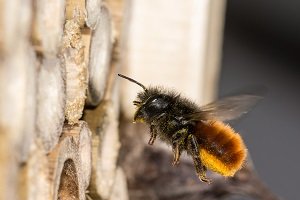
You can build an insect hotel for wild bees.
Bees are usually neither aggressive nor sting for no reason. Although the animals have a sting, they only use it against attackers. To protect their nests or queens, bees can be very defensive.
However, as long as bee nests are left alone, the risk of a bee attack is low. Bees and bumblebees mostly live peacefully next to humans, while wasps are more of a problem near human dwellings.
So as long as you don’t step barefoot on a bee crawling on the ground, you don’t have to be afraid of them.
Find more Garden and Sustainability guides and tips.
