
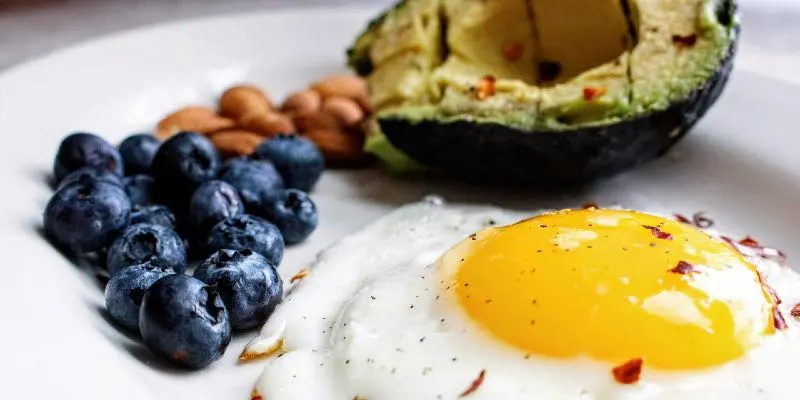



This guide explains how to go into ketosis, the tips for how to go keto faster, the science behind it — and the risks to watch out for.
Intermittent fasting, paleo, low carb or keto diet – there are numerous forms of nutrition that are said to have a positive effect on our body. Ketosis is on everyone’s lips as a fat burner.
How to go into ketosis: overview
Are you wondering what’s behind it and what exactly is meant by ketosis? We have compiled the most important facts about fat metabolism and how to go into ketosis.
What is ketosis?
To put it simply, ketosis is fat metabolism. Normally, your body gets energy from sugar. Glucose is converted into the energy supplier ATP with the help of oxygen. If there are no carbohydrates available for energy for a longer period of time, your body has to help itself in other ways. That’s where ketosis comes in.
Once your body’s energy reserves are depleted, the liver goes through what’s known as ketogenesis. In this metabolic state, your body converts fats and proteins into energy sources.
Beta-oxidation, the breakdown of fatty acids, produces the coenzyme acetyl-CoA. This is used to produce the ketone bodies that provide energy to your body.
The process of ketosis begins only when glucose stores are completely empty. This means that neither carbohydrates from the last meal nor stored carbohydrates (glycogen stores) in the muscles and liver must be present.
Carbohydrates are always the number 1 source of energy for your body. Ketosis only occurs when all carbs have been consumed. Ketosis is therefore also known as “starvation metabolism”. To ensure an adequate supply of vitamins in ketosis, it can be useful to supplement with our Daily Vitamins as a supportive measure.
By the way, you don’t have to worry about your brain’s energy supply in ketosis. Ketone bodies are water-soluble and can be transported through the blood. In this way, they cross the blood-brain barrier and are available to the brain as fastenergy suppliers.
Side Fact: With an average body fat percentage, a person can survive for about 1.5 – 2 months only on fat reserves.
What are ketone bodies?
Ketone bodies are not simply fats, but are formed during the metabolism of fatty acids. The ketone bodies acetoacetate (AcAc) and hydroxybutyrate (3HB) serve as an energy supplier. As a by-product of ketosis, acetone is also produced in the oxidation process. This is simply exhaled.
Ketosis and bad breath therefore often go hand in hand. Especially when switching to the keto diet, bad breath is not uncommon. This is due to the acetone in the exhaled air. After a few weeks, however, this wears off. The more efficient your ketogenesis becomes, the less acetone is produced.
How do you go into ketosis?
You can achieve the metabolic state of ketosis in different ways. Their lowest common denominator: You need to reduce your daily carbohydrate intake to 30-50g and get your main energy from fats. You go into keto by…
- Fasting for more than 24 hours and then follow a ketogenic diet.
- Reducing your daily carbohydrate intake to less than 50 g over a period of at least 2 weeks and get your energy primarily from fats.
- Intermittent fasting and ketogenic diet.
However, you are not in ketosis after the first fasting interval. It is true that after about 16 hours without eating, the body burns more energy from fat and the fat metabolism is trained.
Among other things, you will notice that with regular 16/8 intermittent fasting, you will soon no longer be hungry after a certain period of getting used to it.
However, in order for your body to switch completely to ketosis, your body’s glycogen stores, i.e. your body’s carbohydrate stores, must also be empty. This is the case after about 24 hours without energy supply. How full your glycogen stores are also depends on your training condition and diet.
As soon as your body notices that carbohydrates are no longer to be expected, the switch to ketosis begins. Now it begins to form the enzymes necessary for the conversion of fatty acids into ketone bodies.
How long does it take to get into ketosis?
It takes an average of 4 -7 days for your body to finally switch to ketosis. Depending on your metabolism and dietary habits, the range can vary from 24 hours to 14 days.
In order to permanently switch to the ketogenic metabolism, you must consistently follow a ketogenic diet and strictly observe the limit of 30 to 50 g of carbohydrates daily.
Low carb flu: from glucose to ketosis
The “low-carb flu” is a common side effect of switching from glucose metabolism to ketosis. The unusually low blood sugar level messes up your body.
This can manifest itself in a variety of ways. Poor running, headaches and stomach problems are the most common symptoms of low-carb flu. These symptoms should disappear as soon as ketosis runs for a few days.
Tip: Drink plenty of fluids and consciously allow yourself small periods of rest during the first two weeks of the ketogenic diet to give your body time to adjust to the new situation and the ketogenic diet.
After you’ve done everything you can to get into ketosis, it makes sense to also measure whether it really worked. There are subjective methods that are simply based on body awareness and objective measurement methods that measure ketosis.
If you have a lot of experience in ketosis and the alternation of glucose metabolism and ketosis, and your body is doing well, you can usually rely on subjective body perception.
Measuring ketosis: subjective parameters
These are possible signs of ketosis:
- Satiety until long after meals
- Regulated moderate feeling of hunger
- No cravings or sugar cravings
- Restful overnight sleep
- Slightly fruity bad breath
Measuring ketosis: objective measurement methods
If you’re new to ketosis, it’s a good idea to measure ketosis using empirical methods. Common methods for measuring ketosis include:
Keto sticks
With keto sticks, you measure the level of ketone bodies in the urine. In order to make a valid statement, you should test daily for a week. Ketostix are available at pharmacies and are a simple, though not 100% safe, method of measuring ketosis.
Breath Monitor
More accurate than the keto sticks is the breath meter. The slightly fruity bad breath in ketosis is caused by the increased acetone concentration in the exhaled air.
You measure the concentration of these acetones with a special breath meter for ketosis measurement. This investment is worth it if you want to work with ketosis on a regular basis.
Blood test
Measuring the concentration of ketone bodies in the blood is the most precise way to find out if you are in ketosis. Ketone body meters for personal use work with a small prick in the fingertip and give you the result immediately.
What are the benefits of ketosis? 6 benefits backed by science
Ketosis is nothing new. Long-term ketogenic diets are more likely. Adherents of the keto diet swear by ketosis as a performance and health booster. These are the top 6 benefits of ketosis, according to studies.
#1 Ketosis is supposed to fill you up
If you don’t eat for a long time, your stomach releases the hormone ghrelin. Ghrelin is also called the “hunger hormone”. It tells your brain that it’s time to eat.
One study looked at the relationship between ketosis and appetite and found that during ketosis, some subjects’ ghrelin levels dropped. However, this cannot be generalized. Another study found that some subjects have a strong feeling of hunger despite ketosis.
Every person’s metabolism is highly individual and complex. Against this background, it is difficult to make general statements. It’s best to see for yourself how well you can cope with longer interruptions in eating. Intermittent fasting is ideal for getting a glimpse into the world of ketosis.
#2 Ketosis is said to support body fat reduction
On the one hand, this is due to the fact that in the ketogenic diet there is no excess glucosethat can be stored as love handles. On the other hand, ketone bodies built from fatty acids are either used for energy production or excreted in the urine. During ketosis, you’re permanently in fat-burning mode.
A ketosis study from the American Journal of Clinical Nutrition showed that a high-protein ketogenic diet reduced the feeling of hunger more in subjects compared to a high-protein diet with a moderate carbohydrate intake.
Consequently, the “ketogenic” group ate less and lost more weight overall. But third-party variables can also play a role here: Those who decide to follow a ketogenic diet often consciously pay attention to their calorie intake.
#3 Ketosis is said to prevent food cravings
According to keto research in the Journal of Holistic Performance, ketogenic diets caused subjects to stop having food cravings after an adjustment period. How can this effect be explained?
During ketosis, you have stable blood sugar and insulin levels. Your insulin levels are closely linked to your food intake and especially to all forms of sugar. The higher your blood sugar level, the more insulin is expelled.
The hormone is responsible for lowering your blood sugar levels again by ensuring that the sugar is either immediately converted into energy (ATP) or stored as a glycogen store in the liver and muscles.
Rapid increases and rapid decreases in insulin levels cause food cravings. This craving for more sugar is interrupted in ketosis: the lack of carbohydrates keeps your blood sugar level stable. You’ll be fuller longer and won’t have sugar cravings anymore.
#4 Ketosis is said to promote focus
The stable blood sugar level thanks to ketosis not only prevents food cravings. Thanks to the more even energy supply to your entire organism, especially the brain, sudden performance drops are avoided.
This allows you to focus better and longer on one thing. The positive effect of ketosis on mental performance has also been reported in studies.
#5 Ketosis can reduce inflammation.
On average, we eat too much sugar. Above all, hidden sugars in ready-to-eat foods, ice cream and the like add up.
The consequence of high sugar consumption is, among other things, chronic inflammation, which often manifests itself in blemished skin or digestive problems.
While you’re in ketosis or working towards ketosis, you’ll automatically eat less sugar and avoid its pro-inflammatory effects. In addition, there are studies that indicate that ketone bodies can reduce enzymes that promote inflammation.
#6 With ketosis, the ultramarathon might be achievable after all
At least if the journey is the destination. During leisurely running, cycling or hiking, i.e. moderate endurance sports in the aerobic intensity range, your body burns fat.
The better it is accustomed to ketosis, the more efficiently energy production from fat will be. Your body then runs in feel-good mode almost permanently.
By the way, there are also high-performance athletes who achieve record performances in ketosis, even in anaerobic intensity ranges. To do this, however, you need to be sure that the ketogenic diet suits you and go through a well-planned transition phase.
Don’t forget that everyone’s body is different. For some, ketogenic diets may work well and for others, they may not. If this is of interest to you, it is best to contact an experienced nutrition coach.
Clearly, the positive effect of the keto diet on endurance and performance during sports has not been proven. Research on keto by the Journal of the International Society of Sports Nutrition indicates that other factors, such as genetics or recovery, also have a major impact on performance and can skew results.
ALSO READ: How to add interval training to running
Is ketosis healthy?
Ketosis has a reputation for having many health benefits: from reducing oxidative stress, weight loss and faster energy production, to various positive effects on brain health and the treatment of Alzheimer’s disease and diseases.
It is true that there are various studies that prove these effects and in certain medical cases, a ketogenic diet can be a sensible step. Nevertheless, health claims should always be viewed with caution. If you look closely, you will always find evidence of the opposite effects.
A little bit of intermittent fasting should be easily feasible for any healthy person and certainly brings some benefits.
If you want to follow a long-term ketogenic diet or want to address a health problem with a ketogenic diet, seek individual advice from a specialist or doctor. They should analyze your nutritional history, motivation, and goal and work with you to create a ketogenic diet plan that suits you.
Is ketosis dangerous? – Disadvantages of the ketogenic diet
Ketosis is not dangerous, but simply an alternative energy production process of the body. As explained in the section “What are the benefits of ketosis?”, it also comes with some benefits.
But the keto diet also has its downsides. However, the problems are not so much caused by ketosis itself, but rather by the ketogenic diet necessary for it.
#1 Lack of long-term studies
The strict ketogenic diet necessary for ketosis is still poorly understood. Although there are many studies, representative long-term studies on the ketogenic diet and permanent ketosis over several years are scarce.
This is one of the reasons why nutrition experts and researchers recommend interrupting long-term ketosis from time to time and switching back to glucose metabolism over a certain period of time.
#2 Ketogenic Foods Are Less Practical
In the case of intermittent fasting, this aspect is less true. If your goal is to be in ketosis permanently, you can’t avoid switching to a ketogenic diet. This often leads to fewer fruits and vegetables on the table.
Theoretically, this doesn’t have to be the case. But lack of time, no desire to cook, and the lack of availability of healthy low-carb snacks on the go often lead to eating more animal snacks than veggies.
#3 Saturated fat and animal protein
The ketogenic diet tempts you to eat a lot of animal proteins. The metabolism of animal protein puts more strain on the kidneys than the metabolism of vegetable protein. For healthy people who drink a lot, this is not a problem. If you have kidney problems, discuss a ketogenic diet with your doctor beforehand.
In addition, consuming a lot of fat carries the risk of also eating a lot ofg-saturated fatty acids. These are repeatedly investigated in the context of coronary disease. Therefore, when choosing your foods for ketosis, always look for high-quality fats with a high proportion of unsaturated omega-3 fatty acids.
#4 Thinking outside the box: The ecological aspect
What you eat is a very personal choice. It affects how you feel, what you can do, how well you regenerate, and how healthy you are. Last but not least, food in a social context is also a source of identity.
But the decision about what we eat isnot at the heart of the matter. A diet with a lot of animal products is much more resource-intensive and has a higher ecological footprint than a plant-based diet.
In addition, there is the social and ecological impact of feed production and the production conditions in mass farms, as well as possible transportroutes.
This also applies to fish. Wild-caught fish may be healthy, but deep-sea fishing is a major contributor to overfishing the world’s oceans, so again, you need to take a close look at what you’re buying and where it’s coming from.
When choosing ketogenic foods, for the sake of yourself and the environment, you should make sure that your basic diet is vegetable-heavy and buy all animal products in the highest organic quality and from species-appropriate husbandry.
Ketogenic diet nutrition plan — The Basics
The goal of a ketogenic diet is to reprogram your body from glucose to ketone bodies as its primary energy source, i.e. to establish the metabolic state of ketosis.
The main features of the ketogenic diet are therefore a high fat intake with moderate protein and minimal carbohydrate intake. The upper limit of the daily carb intake is often 30 to 50 g in the keto scene.
To make sure you actually implement this, it’s best to put together a nutrition plan for your ketogenic diet. Try to stick to this for 6 weeks and then make any minor adjustments to the areas that don’t work for you.
To do this, keep a close eye on how you feel after which foods: When are you full of energy? When tired and bloated? How is your digestion doing?
The most important thing about the ketogenic diet is to make healthy and balanced food choices. If there are nutrient deficiencies and an excess of saturated fat, it is not ketosis that is to blame, but simply your diet.
What the right ketogenic diet plan looks like for you depends on your digestion, goals, calorie expenditure, and lifestyle.
To really get into ketosis, you have to strictly adhere to the distribution of the macronutrient requirements of the keto diet. As a guideline, the following breakdown applies:
- 75% fats
- 20% protein
- 5% carbohydrates
Do you want to lose weight or build muscle through ketosis? Then you have to plan for a calorie deficit or a calorie surplus in your diet plan.
Ketogenic Foods – Quality Over Quantity
A prerequisite for a successful and healthy ketosis is the choice of the right foods. Classic baked goods, dried fruits, sugar and confectionery are now taboo. But if you’ve been looking forward to deep-fried chicken nuggets and cheese balls, you’re wrong. During ketosis, healthy foods are on the menu.
Choosing healthy foods for ketosis also means paying attention to the originand processing. Where food comes from and how it has been processed has a direct impact on the nutrient content and quality of fats.
Apart from that, animal products from factory farming are not only inferior in terms of qualityin many respects, but also ethically cannot be reconciled with the ecological and social challenges of our age.
Cutting corners on the quality of food always has negative consequences for other people, animals, nature and, above all, your health.
The higher the quality of your food, the higher its nutrient density. Therefore, apply the following criteria when choosing your ketosis foods:
- Organic quality
- Freshness
- Free-range eggs
- Free-range animal products or regional game
- Fish made from sustainable (!) Tomboy
- Ketogenic Foods: Healthy Fats
First things first: During ketosis, fats make up about 75% of your total energy intake. That’s why they have to be particularly healthy.
The oils of your choice are coconut oil, linseed oil, canola oil or olive oil. When it comes to oil, always pay attention to extra virgin quality and it’s best to buy organic oil. Ghee, clarified butter, is also a good food for ketosis.
Other sources of fat include nuts, seeds and avocado. Chia seeds also impress with a good ratio of omega-3 to omega-6 fatty acids. Among animal-based foods, fatty sea fish is on the list of ketogenic-grade foods.
Ketogenic Foods: Fruits and Vegetables
As with any other diet, vegetables are your staple food on the ketogenic diet. Since some vegetables are real carbohydrate bombs, you have to take a close look at vegetables.The more starch a vegetable has, the more carbohydrates it has.
(Sweet) potatoes, pumpkin and carrots are no-gos or are only allowed on your plate if you keep a close eye on your other carbohydrate intakeon that day.
In addition to many vitamins and minerals, fruit usually also contains a lot of fructose. Therefore, always consider it special and enjoy it in moderation.
It’s easy for you in the berry season: blackberries, raspberries, currants and strawberries contain little sugar. And strawberries are around for 3 months.
Ketogenic Foods: Protein
In addition to fat, avocado and nutsalso provide you with high-quality proteins. The same goes for healthy sea fish. Regional plant-based lupin products and tempeh also often have a good protein-to-carbohydrate ratio.
If you get your protein from animal foods, such as eggs, quark, or meat, make sure to buy grass-fed products of the highest organic quality. Only then will you be sure to consume really high-quality proteins.
Protein shakes are the ideal protein kick in the ketogenic diet for in between. They combine fewer carbohydrates and high-quality protein. 100% vegan or with grass-fed milk protein.
It’s almost self-explanatory: During ketosis, allsweetened drinks and fruit juices are completely taboo. Milk and plant-based milk alternatives also often have too high a sugar content.
Nevertheless, it is important to drink enough. Your main source of fluids should be water. Unsweetened tea, infused water, or homemade iced tea without sugar are also great.
Ketogenic Foods: No-Gos
Bread, baked goods, and cereals of any kind have too many carbohydrates for the ketogenic diet. Good news: Pancakes & Co are still in it. Simply bake with coconut or almond flour to replace carbs with healthy fats.
By the way: All kinds of sugar are also taboo. This includes coconut blossom sugar, honey, all syrups and added fructose in food.
In summary…
- Ketosis is a state in which your body converts dietary fats into ketone bodies and uses them as its primary source of energy.
- Ketosis is an alternative to glucose metabolism.
- The more stable blood sugar levels during ketosis have many health benefits.
- Ketosis requires a strict limitation of daily carbohydrate intake.
- Long-term ketosis should be interrupted from time to time, as there are no long-term studies on ketogenic diets so far.
