




Outlines how to define ethics in business, what are ethics in business, the importance of ethics in business, issues with business ethics, dilemmas in business ethics, and business ethics examples.
Find more business guides, tips and advice
CONTENTS
How to define ethics in business: business ethics definition
How to define ethics in business: what is business ethics
How to define ethics in business: how is it different to morals?
The importance of ethics in business
Issues in business ethics
Where the team fits in the ethical framework
How to write a code of ethics for a business
How to define ethics in business
Business ethics definition: Branch of applied ethics, which mainly deals with questions of responsibility of companies and their employees ( including Corporate Social Responsibility).
Systematic starting point to define ethics in business is to understand the dilemma in business ethics — the conflict between profit, here in the broader sense understood as the company’s success in a competitive environment, and morality, understood as an adequate account of the legitimate interests of affected stakeholders in the company.
What is business ethics?
Business ethics is the method for finding the path among the various forms of this conflict, e.g. corruption, child labor, environmental pollution, balance sheet concealment, etc. in an ethically justifiable and economically implementable form. In addition, it can provide information on how social values - also and especially under competitive conditions – can be better brought to bear in business practice.
Ethical corporate management means only taking such actions and decisions that can be justified in front of the critical public with understandable reasons.
At the same time, business ethics requires that the management of the company exemplifies ethical guidelines, acknowledges them again and again, and recognizes ethical behavior within the organization.
The fact that corporate decisions are more and more viewed in the light of the public and are therefore subject to an assessment by them, forces the company to define ethics in business by now including questions of social value in its decisions.
How is it different to morals?
In everyday life the terms morality and ethics are often confused and used for the same thing… Mostly for correct behavior. What is the difference between morals and ethics is discussed below. This is about a general, widespread understanding of morality and ethics. As always, there are people who make up their own mind on terms. It is important that morality comes before ethics.
Morality is like an internal compass. This compass doesn’t point north or south, but rather gives you a sense of what is wrong and what is right, or what is bad and what is good.
Ethics arose from the urge to think and speak about morally motivated action. To do this, it is important to have terms that enable thinking and speaking at all. The key question is: What should I do? Ethics is thinking about morality or the science of morality. That is why it is called ethics lessons and not morals lessons. Morality is the subject of ethics lessons. Just like in the science of living nature (biology) and thus in bio lessons about life as an object.
The importance of ethics in business
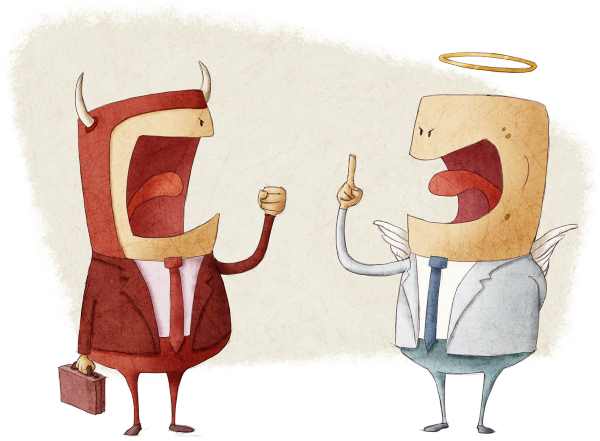
During the existence of mankind, certain rules of behavior have developed thanks to which people, as social beings, try to establish interpersonal relationships. No matter how ridiculous ethical norms may seem to someone without the world in chaos. To a greater extent, it affects the norms of business relationships.
The business line consists of many connections and complex relationships: employer / employee / employee / employee / seller / buyer … There are many such communication systems and different roles that people have in society. And the norms of conduct clearly govern where and what can be said or done, and are not a person who is close or rude.
Modern business ethics begins with critical reflection on the traditional business ethos: ethically-conscious business management is not just a fashionable topic, but business activity has always inevitably been based on business ethics.
There is no ethically justifiable principle of profit: The position that the principle of profit is not only the right of the entrepreneur, but also his primary duty, is not an ethically legitimate position, as it is the logical consequence of subordinating all other goals and values to the principle of profit would mean.
Business ethics should not be conceived as an external limit, but as an internal basis of the entrepreneurial striving for success: The integrative approach of business ethics sees this as the foundation for the legitimate striving for success and not as a limitation.
Business ethics is more than just about business: The integration of ethics and the pursuit of success is a business challenge. To this end, the companies must be aware of their co-responsibility for regulatory policy.
Corporate responsibility must be exercised in dialogue: The aim is to include all stakeholders in the decision-making process in the event of differences in interests and values in order to find a solution that is acceptable to all.
Ethical corporate management means only taking such actions and decisions that can be justified in front of the critical public with understandable reasons.
At the same time, business ethics requires that the management of the company exemplifies ethical guidelines, acknowledges them again and again, and recognizes ethical behavior within the organization.
The fact that corporate decisions are more and more viewed in the light of the public and are therefore subject to an assessment by them, forces the company to include questions of social value in its decisions.
Issues in business ethics
The world is developing, new companies are emerging, trading markets are expanding. When it comes to partnership, business ethics come to the rescue. The cultures of different countries are different, but they try to shape the rules of conduct in business together.
The indestructible credo of an entrepreneur “the customer is always right”, for example, is the basis for successful company management. Indeed, in the face of fierce competition, it is the rudeness to consumers of goods and services that has negative consequences.
Norms and rules of conduct change gradually. In the past, if a man was forced to open the door to a woman and let her go ahead, then it had become unnecessary lately, when women became full participants in the business sector. Despite the changes, every self-respecting businessman needs to be aware of ethical norms.
First and foremost, this rule applies to international relations. The higher the level of negotiation, the more attention is paid to researching etiquette. If norms of conduct in international business can be reduced to a number of general rules, summits are held with strict observance of ceremonies.
The business relationships demand clarity and brevity from their participants, inviolability of the word, literacy, respect for the laws or principles of others, normativity in language and clothing. The high level of negotiation requires clear knowledge, for example the rules of greeting, the order in which the participants present themselves, the appropriateness of gifts and souvenirs.
The boss founds his own company and not only thinks according to the scheme of his activities, but creates an entire ethical code through which the new company will have weight. In this case, the business ethics of service relationships affect the work of the entire company.
Suppose the leader only thinks about his own position, he does not trust the employees and does not let them intervene in the affairs of the company. Work productivity in such a team is very low because there are no common interests.
Where the team fits in the ethical framework
There is another principle of business relationships for ethics – the team. In this case, in every way, the head will be able to combine the interests of the case with the needs of a particular person, it won’t be too harsh or too forgiving. In such a team, every employee clearly adheres to the ethical standards developed by the company. Punctuality, precise execution of instructions, order in business papers, dress code – all of this is taken into account. A manager doesn’t have to blush in front of customers or partners for his company. The basic concepts of ethics should know everything.
Anyone who isn’t even in business needs to know what the rules of business ethics contain. Whether it is necessary to knock on the door, to enter a public facility, as one calls a friend “you” or “you”, to come to work for him, who should help with a greeting and for whom a greeting is sufficient. Ignorance of such rules sometimes makes a person close and ridiculous, and in certain cases even disrupts the work activities of other participants in a business relationship.
The components of the company’s success also necessarily include the moral qualities of the employees and the company’s reputation. There is no need to explain how these components are interconnected when one is impossible without the other and all of it together is unthinkable without a third strict adherence to the norms of business ethics.
How to write a code of ethics for a business
1: learn to think as well as to
Break away from counterproductive either-or thinking. Too many decision-makers in companies believe that only one thing can succeed: Either achieve profitability and profit orientation or realize ethical intentions. However, there are many examples where entrepreneurs set an example in their companies that economic success and stable growth are possible despite – or perhaps because of – ethical convictions. Often it is precisely the companies that are able to survive that have abandoned the either-or attitude and are capable of both-and-thinking.
So at the beginning there is the question: is it possible to internalize the as well as thinking?
2: create intersections
Of course, companies have to be profitable. Failure to do this endangers jobs and the company’s livelihoods. On the other hand: Scandals that regularly shake the republic show the fatal consequences for society and the economy if companies focus solely on profitability thinking.
However, intersections between economically and ethically responsible programs of action can be created. The prerequisite is that companies check with every decision whether and how both interests – profitability / profit / profitability and ethics / morality / responsible behavior – can be linked. A vivid example: If economic goals can only be achieved by blatantly damaging employee interests (e.g. in the area of job satisfaction) or customer interests (e.g. in the area of safety), then this is not an ethically responsible program of action.
The question is: In which areas is it possible to create intersections between economically and ethically responsible programs of action?
3: Formulate a basic ethical understanding
Create an ethical awareness. The necessity and the sensibility of including ethical criteria in economic considerations must become a matter of course. This is easier required than done: An intensive discussion process is required with the aim of creating a code of ethics that serves as a guide for all those involved.
Formulate business principles and corporate guidelines that reflect the basic ethical understanding of your company. Because more and more customers and consumers today want to know what ethical attitude a company adopts, which social-ecological principles it considers important, whether it acts in a resource-saving manner and treats people and the environment fairly: With the help of which specific activities it succeeds economically and ecologically to connect and reconcile?
An example are ethical investments: Investors want to know what exactly is happening with their money and avoid participating in questionable and ethically dubious transactions, even if the promise of return is extremely attractive. This awareness is growing.
So ask yourself: What is your basic ethical understanding?
4: Involve many managers and employees
In order for the code of ethics to become binding and for those involved to identify with it, as many managers and employees as possible should be involved in the drafting process. After all, it is above all the employees who bring the ethical guidelines to life in the operative business and in the interaction with customers.
Think about it: Is it advisable to set up an “ethics task force” consisting of managers and employees from as many company departments as possible?ADVERTISING
5: Clarify your relationship with customers and employees
When creating a code of ethics, it is important to clarify your relationship with customers, employees, competitors and other stakeholders and to anchor them in the code. For example, the following aspects can be content guidelines: your vision and your mission, your core business message and the company’s purpose and the direction in which your company should develop.
With regard to your customer orientation, the code can, for example, describe which customer benefits the company wants to generate and which aspects are particularly taken into account in the quality of products and services. In the context of employee relationships, you can emphasize that you do not see your employees as mere functionaries, but as individuals with personality. Employees are high performers, not cost factors.
So how do you define your relationship, especially with customers and employees?
6: think outside the box
Broaden your perspective when creating the code: How do you use resources? How do you feel about your environment, the institutions you deal with, society as a whole? Do you think about the consequences of your actions for future generations? Sustainability is the keyword.
In addition to sustainability, companies with ethical awareness focus on principles such as meaningfulness, fairness, transparency and the development of potential. Such companies treat their employees fairly and on an equal footing, for example, and they pursue an open communication and information policy. Its aim is for employees to be able to use and develop their skills and qualifications in their respective jobs.
By creating meaning it is meant that there are answers to the question: “Why do we do what we do?”
7: Constantly adapt the code
Always compare the code of ethics with reality – it is not set in stone and should be adapted to new framework conditions and changed if necessary. Check which ethical goals are being pursued and which are being lived in reality. Formulate commandments instead of prohibitions to get people to participate.
