


There are numerous plastic parts that look anything but beautiful over time. Window frames, garden furniture or kitchen boards suffer from impairments. However, in order to restore them to a new splendour and, if possible, to stay the same, we will show you in our article how to clean plastic properly.
1. Clean plastic properly – outdoors
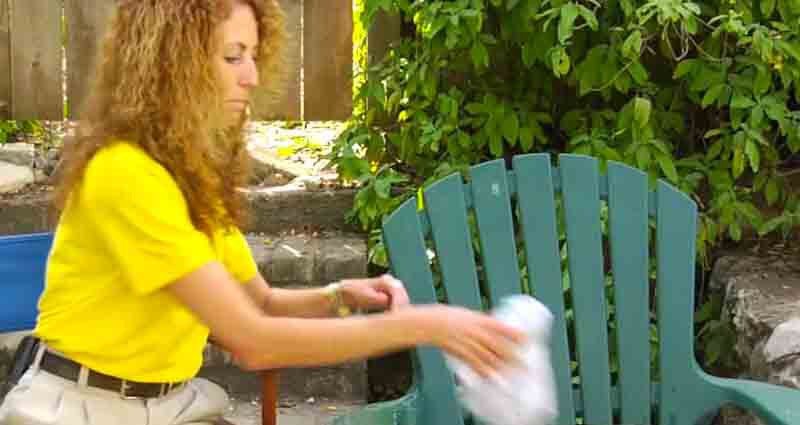
Plastic not only plays an important role in the house, but is also indispensable around the house. Door or window frames, blinds or plastic chairs – all these things are exposed to the weather and therefore suffer particularly badly.
If plastic is outside for too long, it is no wonder if it yellows. It settles green chip or sprayed dirt causes stains.
In any case, to clean plastic properly it helps to clean all plastic parts that are on the outside regularly. In this way, dirt particles have no chance of penetrating deeply and leading to a permanent change that is not or very difficult to remove.
These home remedies help to clean plastic:
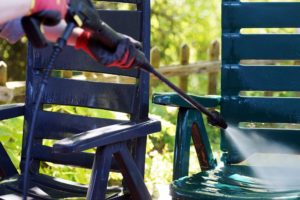
Use a lot of water to remove dirt on plastic quickly and effectively.
- Liquid detergent: If the white garden furniture is yellowed or greyed out, there is hardly a better method than cleaning with full detergent. In contrast to color detergents, this bleach contains, which removes paint deposits particularly well. Alternatively, of course, you can also use powder and use this with a little water.
It is particularly important that you remove the residues of the detergent thoroughly afterwards and dry the plastic parts. - Vinegar: Mix about 0.5 litres of vinegar or 100 ml of vinegar with 2.5 litres of water in a bucket. Then clean the plastic with a soft sponge. Afterwards, a second wash cycle is carried out with clear water to remove the vinegar residues.
- Dirt erasers: If only individual areas are particularly dirty, use an eraser or an eraser sponge to clean the stains on plastic.
In the outdoor area, you also have the opportunity to work with much more water. Use this to your advantage and reach for the garden hose or high-pressure cleaner in the right place.
A closed roller shutter is an excellent way to squirt it off.
Pay particular attention to the fact that the plastic parts are then properly dried.
Tip: As an alternative to typical home remedies, you can also try plastic cleaners. However, the results are generally not much better.
A rather gentle alcohol-based detergent is isopropanol. In addition to cleaning, you can also use it for disinfection if you want to remove bird dirt, for example. However, you must be careful when using it and always work with gloves.
2. Maintain plastic well outside – so you can make less stains
To care for plastic, you will often find tips that use oil. However, this has no lasting effect and only in the short term causes the surface to shine again.
Instead, be sure to rub plastic dry after cleaning. Afterwards, you can effectively seal the individual parts with auto-polish.
This has made it harder to fix stains on the material, as the surface is very smooth. You can also use the polish for all plastic parts on your car.
To protect garden furniture in autumn,it is best to cover it with a protective tarpaulin. It would be even better to place them in a frost-free room, such as the cellar, or a sheltered area, such as the garden hut or a shed.
In this way, you prevent microcracks from occurring. This makes the material brittle, making it easier to tear. In addition, dirt particles have an easier time to get stuck there.
3. Clean plastic properly – indoors
Good to know. Do not use abrasives or coarse sponges when cleaning plastic to avoid scratches.
Basically, the above tips can also be used for plastic inside. In most cases, however, the interior is more concerned with minor dirt, which is to be specifically removed.
If a little detergent and water are not enough to clean the plastic, try using the following instructions:
Put a little soda or soda on a wet cloth and rub directly over the stain. Afterwards, wipe again with a damp and a dry cloth.
Alternatively, you can use baking powder. In this case, however, you must be very careful that you then remove the residues, as baking powder can promote mold formation.
If you are dealing with heavy soils, such as nicotine stains, typical home remedies often do not help, as the dirt penetrates deep into the plastic. It is tempting to use harsh chemicals such as oven cleaner, but often they will damage the plastic.
Find more household tips in our Cleaning section
