



You do not always have to resort to pills for pain and illness. Thus, the healing power of plants has been proven for centuries and has long since been underestimated by scientific medicine. The good thing about it: They are easy to grow at home. These plants turn your garden into an instant pharmacy and are the best medicinal plants for your garden.
Already many hundreds of years ago, the effect of medicinal plants formed the basis of naturopathy in monasteries. For example, writings from the Middle Ages show that monks already relied on the healing effects and ensured that this knowledge was not lost. Today, around 500 medicinal plants are used to make natural medicines. We have taken a closer look at five of these medicinal plants, which you can easily plant in the garden or on the balcony yourself as the best medicinal plants for your garden.
Best medicinal plants for your garden: Thyme
The thyme is not only a popular spice plant for the kitchen, but also serves as an important medicinal plant to combat cough. But thyme is often used not only for respiratory ailments. In natural medicine, it acts as the purest panacea. Its antibacterial, soothing and anti-inflammatory effects are only a fraction of the healing properties of thyme. In addition, thyme has an antispasmodic effect and thus helps to relieve spasms in whooping and coughing. But also for the treatment of the digestive system and in gynecology this plant is gaining more and more popularity.
Thyme tastes very delicious as a spice, contributing almost unobtrusively to your health. As an essential oil, tea or tincture, the thyme can develop its full healing power in an internal as well as external application.
Originally, thyme was a plant that survived the Central European winter hard and quickly freezed. But now varieties have been bred, such as “German Winter”, which can easily withstand the frost. However, these varieties need a place in the garden or on the balcony, which offers them lush soil and full sun.
Sage: One of the oldest medicinal plants in the world
Sage is one of the oldest known medicinal plants. While in Europe 36 different types of sage are known, especially the true sage (Salvia officinalis) prevailed as a medicinal plant. Its leaves are often used for inflammation of the oral and pharyngeal mucosa. In addition, they have an extremely antiperspirant and disinfectant effect, promote metabolism and stimulate the digestive activity. All its diverse uses make sage a true panacea and one of the best medicinal plants for your garden.
Mostly sage is drunk in the form of a tea. If the oral or pharyngeal mucosa is affected by major inflammation, it helps to rinse and gargle with the brewed sage. And also the essential oil of sage can be absorbed internally. Thus, the oil can have an anti-inflammatory, anti-spasmodic and antibacterial effect. Applied externally, the sage oil can even relieve rheumatic pain.
But beware! You should urgently take care not to overdose. Also, sage should not be taken for too long a period. Experts recommend a maximum duration of two to four weeks. Infants, pregnant women and nursing mothers should also not drink sage tea. The use of sage in these cases should therefore be discussed in advance with the doctor or pharmacist.
To thrive extensively, the true sage needs a sunny and warm location. He should also be poured regularly, but not overly. He can not stand waterlogging.
Coneflower (Echinacea spec.)
Although sun hat is often planted only as a decorative plant, the purple flower has a healing effect. Sun hat has the ability to strengthen the body’s immune system and ward off infections in advance. This is achieved, inter alia, by activating the phagocytes in the blood and tissue. For example, those who are prone to colds or suffer from chronic infections are well helped with this natural remedy.
It is usually administered as fresh juice, tablets or as tea. However, coneflower should also promote rapid wound healing, which is why the flower is also applied in the form of a paste on badly healing wounds. Although there are no verifiable studies on the exact effect of the sun hat, the natural healing in Germany has been working with this medicinal plant since the 19th century.
Coneflower thrives well on dry and sandy soils. He also prefers a bright to full sun location. So he is also for a place in the middle of the garden, on which no shade falls, and a south-facing balcony quite well suited and is one of the best medicinal plants for your garden.
Chamomile – anti-inflammatory, wound healing, antispasmodic
Camomile is one of the best-known medicinal plants. It is also one of the oldest herbal remedies and at the same time one of the best researched. Already in ancient times, healers knew about the positive effect on human health.
Chamomile has anti-inflammatory, anti-spasmodic and antibacterial properties. Regardless of whether gastrointestinal complaints, colds or inflammation of the mouth and throat – chamomile flowers bring the necessary relief. Due to the mild ingredients, camomile is also suitable for children. It can both external wraps and envelopes used in inflammatory sites on the body, as well as in the form of teas are absorbed internally.
Steam inhalation of brewed chamomile can also relieve a flu infection and nasal and sinus inflammation. Add a handful of flowers to hot, but not boiling, water. Cover your head with a towel over the bowl so that the steam can not escape and you inhale it directly. Linger for 10 to 15 minutes over the bowl.
Chamomile prefers a sunny and warm spot to grow enough. But as far as the soil is concerned, this plant is not very demanding which makes it one of the best medicinal plants for your garden.
Lavender: the true peace-maker
Lavender is a natural remedy for inner restlessness and stress. Meanwhile, lavender is no longer just a cure, but an approved medicine, which is mainly prescribed and used for nervous exhaustion, difficulty falling asleep and anxiety. This medicinal plant is in most cases processed into oil.
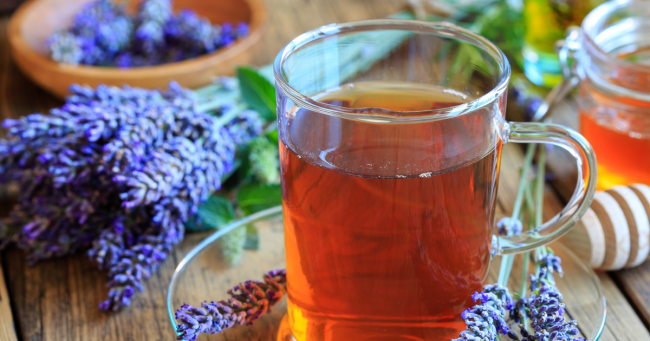
So the lavender exudes a soothing aroma as a fragrance oil. But also the external physical application of lavender oil is healing. For example, a few drops applied to the temples and massaged in may relieve headaches. But even a freshly brewed lavender tea from flowers and leaves can have a soothing and even fever-reducing effect. If you also drink a lavender tea before going to bed, it promotes a deep and healthy sleep and is one of the best medicinal plants for your garden.
Lavender should always be harvested early in the morning. Then the perfume content is highest. Because lavender is a southern plant, it needs a sunny and warm location that provides it with a nutrient-poor and well-drained soil. Especially in winter, care should be taken that the lavender does not over-wet. Otherwise it could come to frost sensitivity.
