
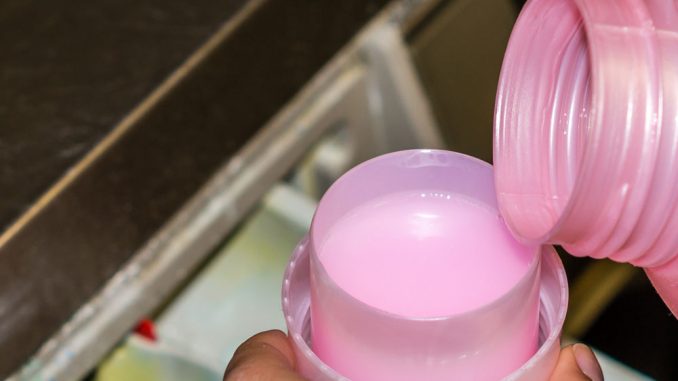

Fabric softener contains ingredients that harm health and the environment. Remarkably better are home remedies, but you do not have to do without the scent experience. Here is how to choose the best fabric softener substitute.
Who does not love the smell of freshly laundered laundry? Whether it’s light, fresh scents or something more exotic – for many people, nothing beats the long-lasting, fragrance of clean clothing. But it is precisely this fragrance that is created with the help of fabric softeners, whose ingredients can be bad. Softeners, chemicals and other substances in fabric softeners are not only harmful to the environment because they are difficult to break down and may contaminate groundwater, but can also have a negative impact on the user, so it’s time to find the best fabric softener substitute that will work just as well for you.
Reasons to use alternatives: the best fabric softener substitute
Some fabric softeners are not only expensive in the long term, they are also bad for the environment and your own health. The complex chemical compounds are not readily degradable in the environment and therefore pollute them, but also harm human health. The contained plasticizers are responsible for health problems. Thus, these scents contain in some large quantities, which are based on alcohol – they irritate the skin and dry it – apart from allergic reactions. The respiratory tract could be significantly disturbed by some fabric softener.
The tallow contained in fabric softeners, made of animal fats, lays like a film over many areas of the washing machine. For example, about the washing drum and in the entire area of the detergent compartment. Deposits and mold form over time in these areas. An excellent playground for bacteria.
Also, as far as your own laundry is concerned, fabric softeners are actually disadvantageous. The contained fragrances usually ensure that the fibers dry out of natural fibers and are less flexible, especially with sensitive clothing – which means that the garment loses its comfort and suppleness over time, even though the fabric softener is supposed to achieve exactly the opposite.
And also in terms of budget, fabric softener proves to be an option for improvement – because down to the number of laundry loadings, this is quite expensive. With some home remedies, you can process significantly more laundry loads and in a gentle way, so that the wallet can also be spared.
So scent laundry without softener
Because of all these drawbacks, it is easy to leave the softener at the next wash simply – but many users fear that the laundry in this case could not smell good or even get a great smell. But even without fabric softener and fragrant additives in the washing machine, it is not difficult to bring the washed laundry to smell: a block of soap or a bag filled with lavender, can be purchased very cheap and bring the laundry at least as well to the fragrance. These can be placed, for example, directly after sorting the fresh laundry in the closet and bring all the pieces contained therein to smell, without they ever come into contact with the laundry. For this purpose, there are also untreated wooden balls to buy,
Incidentally, this trick can be used to another advantage: the scents are usually also repellent to moths that look in the closet for food and perforate the garments. This is due to the fragrance, which is unpleasant for the moths and therefore deters them without any chemicals.
Best fabric softener substitute: home remedies that work
If you want to replace the fabric softener permanently with gentle, inexpensive and not harmful to health alternatives, you have a good selection available for this, which were already used before fabric softener ever came on the market. If one hears of the corresponding home remedies, one often does not think that they can also be used for the purpose – because unfortunately the knowledge about the manifold use of some home remedies is lost.
These things can be easily used as a fabric softener replacement:
❖ best fabric softener substitute: vinegar
Vinegar is considered the main substitute for fabric softener, if it is household vinegar. This can be added in the same amount as conventional fabric softener in the appropriate compartment of the washing machine and has the advantages of removing lime, to disinfect and thus to eliminate unpleasant odors. In addition, vinegar makes the colors of clothing appear stronger, as veils are eliminated.
❖ best fabric softener substitute: citric acid
Expressing half a lemon and pouring its juice into the softener compartment of the washing machine has many beneficial effects. So bright laundry is washed clean and clean, but also softened the water during the wash cycle. At the same time, the laundry load smells very well thanks to the lemon juice, which hardly a chemical fabric softener can match.
❖ best fabric softener substitute: essential oils
Although these do not provide a cleansing effect, they often have an antibacterial effect, as in the case of tea tree oil, for example. Using essential oils sparingly as a fabric conditioner is especially useful if you want to add a nourishing effect, since many essential oils moisturize and therefore care for the clothing fibers and keep them soft. A great advantage of this home remedy as a fabric softener, however, is that essential oils add a long-lasting, good scent to the laundry, which is produced without any chemicals.
Incidentally, these home remedies can also be combined with each other without hesitation, in order to obtain all the benefits at once or to produce a very specific scent that one wishes for. When it comes to home remedies for essential oils, however, they should be used more sparingly, since just a few drops are enough for a strong effect.
The right replacement for detergents
Of course, traditional laundry detergent is also known to contain chemicals, not just good for the environment, and potentially endangering your health – be it as a powder, in a liquid form, or inside the new pods. So if you do without softener of this kind, it makes sense and obvious to find alternatives for the detergent. The following products can be used well in our experience as a detergent substitute. They are also good value for money and are also suitable for vegetarians and vegans.
❖ Washing Ball:
Meanwhile, there are ceramic washing balls to buy containing minerals or effective microorganisms. These emit ions and thus clean the laundry, while the ceramic ball gently “massages” the garments through its shape in the drum and removes any remaining dirt and encrustations.
❖ Washed chestnuts / soapnuts:
Wash the laundry with soapnuts? That’s fine! And very well. Just put a bagful of soapnuts in the washing machine drum and marvel at the result. Pouch and instructions are included. Who needs scented laundry gives essential oils in the fabric softener compartment.
❖ Bicarb Soda
Two teaspoons of the powder can be mixed with a little water and used as a detergent. These alternatives are known for their cleansing effect, but can also be used well with hard water. Only animal fibers, such as cashmere or merino wool, should not be treated as they may swell and lose their beneficial properties.
With a bit of research and inventiveness, it is very easy to replace detergent and softener in a cheap way, without having to live with disadvantages. This not only saves you money but also does something good for your health and the environment.
