
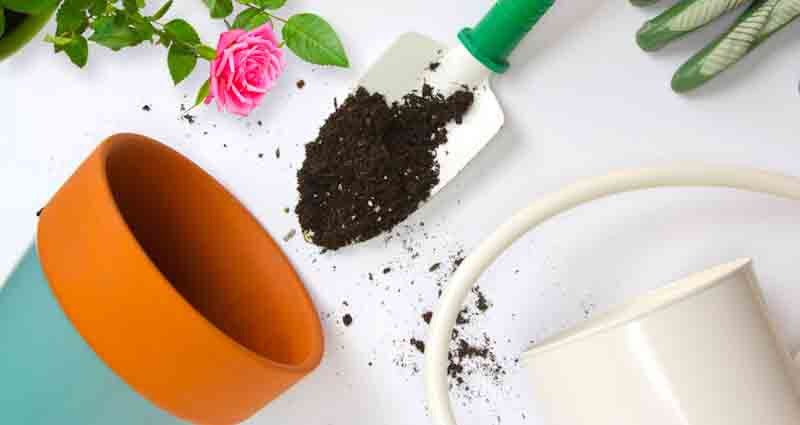



Regular repotting promotes the growth and vitality of your houseplants. Removing old earth creates more space for roots and new shoots. With our tips to repot plants easily you will find out when to implement your houseplants and how to grow your plants even better.
1. Plants need space to thrive
Since the pot cannot grow with it, it must be replaced by a larger vessel approximately every one to three years, depending on the growth. Your houseplants can develop and grow. They will thank you with a faster and more magnificent growth.
Repotting also allows improved stability, as one-sided growing is prevented. In addition, your plants get more nutrients from fresh soil and you can detect pest infestation or mould faster and can fight it accordingly faster.
How to hibernate pot plants in winter
New plants are usually sold in vessels that are too small. In order to give the roots enough space for development, especially for large plants, you should repot after purchase. Our steps below show you how to re-pot plants easily.
2. The ideal time to repot plants
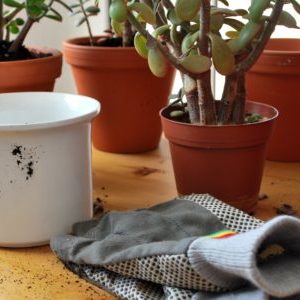
Regular repotting of plants promotes growth.
A particularly good time to repot is the start of the growth phases in spring, in the months of February to April. However, at the latest, when the soil is completely rooted, your plant needs a new planter. They can therefore also replant in summer or autumn if necessary.
For plants with the main flowering season in winter, such as alpine violets or camellia, it is recommended to transplant only after the end of flowering. Many hobby gardeners swear to treat their plants according to the lunar calendar. Depending on the lunar cycle, they adhere to favorable days for repotting or cutting the roots.
How to recycle tetra packs into planters
3. Time, patience, love, the right pot and nutritious soil
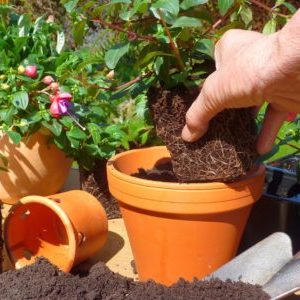
Top your plants every one to three years and remove old soil.
To get started by repotting, you need some important utensils. In addition to enough space for transplanting, you absolutely also need time and patience. You can also use a backing, such as newsprint, which can get dirty or that you can throw away if necessary. However, the optimal potting soil as well as the pot are particularly important.
3.1. The right potting soil
A good potting soil stores water and nutrients, which are passed on to the plants. In addition, the soil buffers harmful substances such as lime and thus protects the plant.
Look for a high-quality soil, which usually costs a little more.
Cheap goods often mould quickly because they are not sterile or contaminated with mourning mosquitoes. In addition, the nutrient content as well as the composition of the more favorable soil are usually not optimal for the structural stability of the plant.
When buying, be careful to buy peat-free potting soil to promote the conservation of the bogs. The missing peat is replaced by compost, cinder humus, wood and coconut fibres. The exact composition is indicated on the packaging of the potting soil. The nutrient supply of commercially available potting soil usually lasts 6 to 8 weeks, after which you should fertilize the repotted houseplants regularly again.
3.2. The ideal pot
The vessel should usually be about 2 to 3 cm larger than the previous pot. If you want to avoid an annual repotting, the pot may also be 5 to 6 cm larger than the old vessel. At best, there should be just under 3 cm between root bales and top frand.
Also make sure that the pot has a drain hole. Since the excess water in a pot cannot drain without a hole, the roots begin to rot and the plant enters. For similar reasons, you should never use your plants without a saucepan.
Whether you choose a clay or plastic pot depends on a lot of your personal taste. We have summarized the advantages and disadvantages of the respective material in the following table for you:
| Description |
|---|
| Clay: Natural material, Air and water permeability, Lose water faster, More resistant due to high weight, More frequent repotting necessary |
| Plastic: Easy to clean, Keep moisture longer, Danger of tipping heavy plants |
For plants with long roots, you can use so-called palm pots, which are particularly high. Azaleas, on the other hand, which are flat-rooted, need special azalea pots.
4. How to repot plants easily
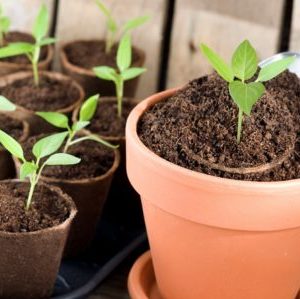
A particularly good time to repot plants is the start of the growth phases is in spring.
The right repotting is easier than you might think. With our instructions, the pot change is quick and easy:
- Before starting the actual repotting, you should examine the plant for pests and take appropriate measures.
- Then shake off the old earth from the root bale, you may need to loosen it a little with your fingers.
- In the new pot, place a large shard of clay on the ground so as not to clog the trigger hole and fill in fresh soil.
- Now insert the plant and fill the pot with soil.
- Push the pot a few times onto a hard plate, such as a table top, to fill all the cavities well.
- Finally, pour the plant with a little water.
To avoid unnecessary dirt in the apartment, it is best to use the terrace or garden to repot plants.
Good to know: Some plants can be divided into several individual pieces depending on their size. Carefully pull the root bale apart with your hand or cut it with a knife. Plant the pieces in non-too-large pots and first pour only sparingly until the parts are rooted.
5. FAQ on repotting plants
Do you have to repot every plant?
In order to ensure a good growth of your plants, ideally all houseplants should be repotted regularly. Keep in mind that you should only repot plants that are sensitive if you deem it necessary. In the case of an orchid or palm, you should first check whether a pot change makes sense.
In which cases should or must the roots be cut?
If you repot plants, you can check particularly well whether all roots are intact. If some roots are dried up or rotten, you can cut these roots. Even with large plants, which cannot be placed in a larger pot due to space constraints, the pruning of the root bale is suitable. Cut off 2 to 3 cm thick slices at the bottom and sides of the bale and place the plant in your old pot.
Note that this is a very big intervention for the plant and it may not recover from this shock.
Find more great plant tips in our Garden section.
