
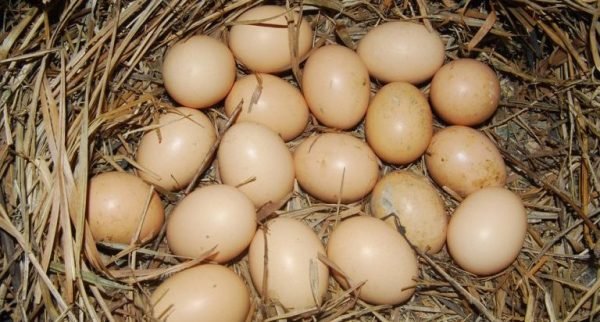



Those who keep chickens in their own garden usually do so to provide themselves with eggs. So which chickens lay most eggs? And of course, the question quickly arises as to how many eggs one can expect per chicken. The answer: it depends on the breed, the conditions of keeping and the food.
Laying performance in general
Laying chickens, i.e. chickens kept primarily for egg production, are not machines. They lay eggs, yes, but not necessarily every day. It may therefore happen that a chicken does not deliver breakfast egg for two or three days. Quite apart from the fact that many chickens completely stop laying eggs in winter. The laying performance is therefore not determined per day, but always counted on the whole year. Which chickens lay most eggs depends on a whole range of factors. These are:
- Breed
- Farming conditions
- Feed
- Age
- Stressors
- Health
Race is the most important factor. In principle, a distinction must be made between the domestic chicken breeds and the hybrid breeds. The so-called hybrid chickens are special breeds, which are mainly used in the agricultural industry. They lay a very large number of eggs, up to 320 pieces a year. The typical domestic chicken breeds, on the other hand, bring it on average only to 180 to 200 eggs per year. But they also live longer and usually have a healthier, happier life. The laying hens that self-sufficient keep in their garden are in the vast majority of cases domestic chickens and not hybrid chickens.
Tip: As a self-sufficient, you should basically leave the new hybrid breeds and prefer to bring old chicken breeds into the garden. As a rule, these are much more straightforward, more robust in posture and can even become properly trustworthy as layers.
Laying performance by breed
When it comes to the laying performance of a single chicken, you can’t avoid statistics. Even laying hens are highly individual creatures and therefore sometimes differ significantly from specimen to specimen. The following information on the egg production of a chicken per year must therefore not be regarded as absolute values. Rather, these are statistically determined values which indicate, in the form of a particular breed of chicken, the performance of a particular breed of chicken in terms of egg production. Even under otherwise optimal conditions, the number of eggs laid may be below these values. All breeds presented here are not winter-laying. They therefore completely end egg production during the cold season.
- Leghorn: 200 eggs
- Italians: 200 eggs
- Kraienköppe: 200 eggs
- Friesian chicken: 160 eggs
- Arcauna: 180 eggs
- Barnefelder: 160 to 180 eggs
- Brakel: 180 eggs
- Hamburger: 160 eggs
All these chicken are so-called old breeds. The Brakel chicken, for example, is one of the oldest breeds ever. They are recommended above all because they usually do not place great demands on their conditions of keeping.
Winter layers
If you don’t want to give up your own chickens’ breakfast egg even with ice cream and snow, you should think about the right breed when buying chickens. As already mentioned, many chicken breeds stop laying eggs during the winter. Some chicken breeds, however, continue diligently even in winter. We are then talking about winter-laying. Typical representatives of which chickens lay most eggs in winter are the following breeds:
- Rhinelanders: 180 eggs
- Sundheimer: 220 eggs
- Ramelsloher: 170 eggs
- Welsumer: 160 eggs
- Plymouth Rock: 180 eggs
- German salmon chicken: 160 eggs
- Orpington: 180 eggs
- Brahma: 140 eggs
In winter-laying, an optimal supply of nutrients through sufficient food is extremely important, especially during the cold season, in order to be able to actually achieve the respective laying performance. If the supply is not correct, they too may stop laying in winter.
Age
Chickens can grow incredibly old if they don’t end up in the cooking pot before. In the scientific literature there are indications that a life expectancy of up to 50 years is the absolute exception, but at least in principle possible. As a rule, one can expect a lifespan of five to nine years for the typical domestic chickens. In terms of laying performance, however, chickens are only really productive in their first two years of life. All the above figures therefore also refer to chickens of this age. Hybrid chickens stop laying eggs completely after the second year. House chickens, on the other hand, often still lay in the third year, but significantly less. How many eggs they produce at this age cannot be specified, as this depends on many individual factors.
Tip: In order to ensure the most reliable egg supply possible throughout, it is advisable to keep chickens of different ages. It may also make sense to acquire more than just a single breed.
Farming conditions
As a rule of thumb, happy chickens lay more eggs. Chickens are happy when they are kept appropriately. The conditions of keeping must therefore be correct and meet the natural needs of the animals. They thus also have a direct influence on the laying performance – regardless of the respective breed. This also includes keeping a flock of chickens with a rooster. Although he does not lay eggs in principle, it contributes significantly to the fact that the hens feel comfortable. It protects them and regulates internal behaviour in the group.
