



Summertime is vacation time, and if you do not have someone to take care of your potted plants for the next trip, you can use one of the following solutions that will work self-sufficiently and without much effort to water your plants while you’re away.
1. Bottle adapter from a PET bottle
A cone of porous clay screwed onto a water bottle (pictured above) is an ingeniously simple way to provide pot plants with water over a period of eight to 25 days. The bottle with the attachment is simply put in the flower pot.
So that no negative pressure is created, a small hole must be made in the bottom of the bottle. The attachments are available for different pot sizes. A two-liter bottle is enough for a pot up to 40 centimeters in diameter for about ten days. There are watering cones, for example, from Aquasolo or Blumat. Four pieces cost depending on the manufacturer about 15 to 20 euros.
2. Woolen cord
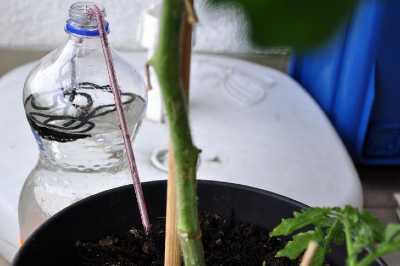
Good for small pots: an empty bottle or other container serves as a water reservoir. This is connected to the pot via a wet, thick woolen cord. Bury the thread close to the roots to half the pot depth. If the soil in the pot becomes dry, it automatically “sucks” water from the reservoir via the moist wool thread.
This method works quite reliably for small pots up to about 20 centimeters in diameter. If you pass the cord through a straw, it does not dry out and it can not drip water next to it. A cheap and reliable method.
3. Multiple system
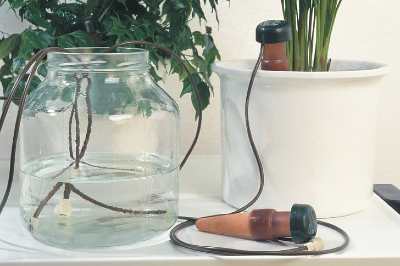
A reservoir for many pots: The Blumat is a clay cone that is stuck in the ground. This is supplied by a hose with water from a tank and pours so the plant. The assembly is, in contrast to the PET bottle attachments, a little more complex. In addition, a sufficiently large water tank is necessary, which stands between the plants. The water dispensers cost in a triple pack about 13 euros.
4. The smart flower pot
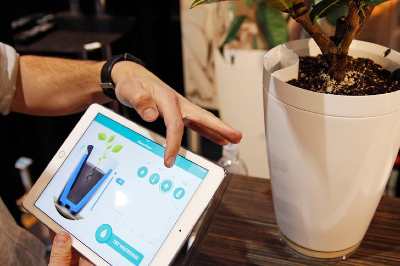
Digital Gardening: The “Parrot Pot” measures temperature, brightness, soil moisture, nutrient content and also pours the plant. For this purpose, a battery-powered irrigation system is housed in the double-walled vessel.
The tank between the plastic walls holds water for up to four weeks, which is dispensed when needed. If you want to know how the plant is going, you can read the sensor data via smartphone.
