
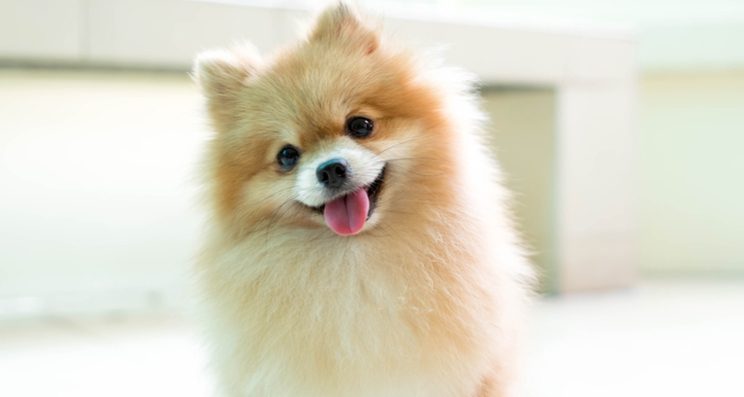

The first protection for your furry friend is the dog skin and coat. First of all, the skin of the dog is the boundary between its organism and the environment and is also referred to as an “immunological interface” because its acid and fat coat, as well as antibodies and immune cells, protect the dog’s body from viruses, bacteria, fungi or other harmful substances can enter the organism.
The skin’s mechanical barrier also protects the dog from attacks such as infrared radiation (through the upper layers of the skin), ultraviolet radiation (through the hair and pigmentation) and biological agents, ie microorganisms or cell cultures, which can cause allergic, toxic or infectious reactions of the body , However, the skin not only prevents any molecules from penetrating the dog’s body, but it also ensures that the body’s own elements, such as water, ions and macromolecules, do not escape through the skin.
However, not only does the skin provide a very effective protective barrier between the dog’s body and its environment, but it is also able to absorb water in the cells of the epidermis, the so-called epidermis.
But the skin not only has an important barrier function, but is also an exchange organ, because for example, sexual hormones are released into the environment and who keeps a male who knows that he does not have to see the common bitch from the neighborhood in order to heartbroken to expire because he can smell them over long distances, because it gives off on the skin sex attractants. But also drugs and toxins that came into the body, among other things pass through the skin from the organism – the body cleans itself virtually through the skin.
Now it is often said that the dog can not sweat and in fact no sweat is released into the coat over the skin of the dog, as is the case with other animals, such as the horse, because the sweat is formed in the apocrine and exocrine glands and The latter can only be found on the nose and the sole of the dog – so a dog can also have “sweaty feet” – and thus it can be assumed that the sweat secretion in dogs only serves to locally cool the skin area.
Nevertheless, a heat exchange also takes place via the skin of the dog, in that thermal units are transferred during a temperature change in that the blood vessels in the skin narrow or widen. In addition to sweat, the dog’s skin also secretes sebum, which is formed in the sebaceous glands on the hair follicles and has the task of protecting the skin from bacteria by destroying them.
Another task that fills the dog’s skin is the absorption of ultraviolet rays in the upper layers of the skin to synthesize vitamin D3. However, this is only a very small proportion of that with which the skin contributes to the metabolism, because with the adipocytes of the subcutis, the so-called subcutis, the skin also plays a role in the fat storage of the organism of the dog.
Everyone knows that the dog relaxes well under his caressing hands that the dog’s skin is also touch-sensitive. But the skin makes much more sense as it transmits not only the information about a contact with the hand of man or an object (such as the dog brush ) to the organism, but also gives hints about sensory stimuli such as the temperature, but also over pressure, which is applied to them up to the sensation of pain. The nerve transmitters in the dermis (dermis) and the subcutis serve as message transmitters.
The skin layers of the dog
As already mentioned, the skin consists of three layers:
The epidermis or epidermis , which serves as the outer shell of the dog’s body as a protective barrier against pathogens from the environment and ensures that the body loses no vital body elements, such as water. The epidermis settles
- the basal layer, in which the cell division takes place and also the melanin (the dye responsible for the skin coloration) is formed,
- the glossy layer, which consists of two to three cell layers and is particularly thick at the nasal level and at the sole bales and whose cells are cells resulting from previous cell division processes as well as macrophages (responsible for the removal of invading substances)
- the grain layer of flattened cells
- a horny layer, whose strongly flattened, seedless cells contain a lot of keratin,
- and a top layer where the cells peel off, together.
The dermis, corium or dermis , the thickest of the skin layers, has a diameter of 1.3 mm at the back and measures 2.5 mm at the bale. The dermis is separated from the epidermis by the basement membrane and contains elastic fibers and collagen, which is responsible for the elasticity and resistance of the skin.
In the dermis but also the hair follicles are settled, which are responsible for setting up the hair and also the Tastzellen, the finest touches of the hair register and forward to the nervous system. In addition, connective tissue cells, blood vessels and nerves, as well as the hair root sheaths and the adjacent sebaceous glands are located in this skin layer.
The subcutis, hypodermis, or subcutis , which is the deepest skin layer, consisting primarily of adipocytes.
The structure of the skin
Only the dermis and subcutis contain vessels and nerves that receive information from both the outside and the inside.
First and foremost, however, the dog is probably less likely to talk about his skin than about his coat, because that is not only obvious, but in the ideal case (exceptions are naked dogs) the skin is almost perfect. It is also referred to as skin appendages, because the skin consists of two structures: the skin in the true sense, ie a horn structure consisting of the epidermis, the dermis and the subcutis, and their attachments.
These include the hair follicles, which are composed of a stronger Leithaar and two shorter trunk hairs with their sheath, a sebaceous gland and a Aufrichtemuskel, which is responsible for setting up the hair, the finer patches that make up the undercoat and various glands such as the apocrine sweat glands and the exocrine sweat glands, the anal glands that mark the area, and the glands above the tail base.
The apocrine sweat glands are distributed throughout the body and are located in the deep dermis and the associated channel is behind the sebaceous gland. The exocrine sweat glands are located exclusively on the sole ball and on the nose mirror and lie at the junction of subcutis and deep dermis.
Of course, the coat performs more tasks than that it only serves to occupy the dog owner – either by being brushed for care of the dog or sucked off the carpet. To protect the coat the dog from the cold or the UV rays of the sun, because even a dog can get a sunburn and who believes his dog to do a favor, if he makes him shave in the summer, should not forget that before especially the awn hairs are that are shortened and they protect the skin from injury, for example, when the dog drifts through the undergrowth.
In addition, the coat is also an effective means by which the dog expresses his mood or communicates with other dogs. If he threatens, for example, then he struggles his neck hair with the help of tiny muscles on the hair root sheath
However, to be able to do the skin’s most important function of growing a lush, flawless and shiny coat out of the skin, the skin must be healthy and up to its task. Whereby this is not entirely correct, because actually the covering and under hair do not grow directly from the skin, but from the so-called root sheath, a depression in the skin, in which the hair root is inserted, which begins with the hair bulb on whose Below are skin cells that store new hair substance and dye in the regrowing hair.
The most important components of the hair are proteins, zinc and copper. In addition, the hair is supplied by the sebaceous glands with nourishing and protective hair tallow, but if the sebum is disturbed and too much sebum is given to the hair, the coat looks greasy and dull. To regulate the optimal production of sebum, therefore, also belongs to the tasks of the skin, as well as the control of the cyclical coat change from the thinner summer coat (formed approximately from March to May) to the thicker winter coat (grows from September to November).
In general, two types of hair, regardless of the fur structure (shaggy fur, hairy fur, fine, silky fur, woolly fur, curly, straight or wavy fur) and the length of the coat (longhair, shorthair, stick hair) form the coat of a Dogs: the outer awn hairs, which are rather stiff, thick and longer and the lower hairs, which are shorter, finer and woolly.
Often, the hair is not the same length and density in the whole dog body and some dogs wear a head on their head or a ruff, which is a lion’s mane honor and some dogs even wear pants – but this is long hair lining the areas behind the runs, under the belly and on the tail. Very long hair on the tail is called a flag and the silky hairs on the back of the forelegs are called feathering.
The length of the coat
If a healthy dog has no hair except for a tuft on the head and tail, then it is probably a Mexican or Chinese nude dog. Your skin is fine, tender and warm skin and has a strong black pigmentation.
In a short-haired dog, the length of the hair of his coat measures at least 15 mm, but not more than 4 cm, the hair being smooth, stiff and relatively hard, as in the stock-haired German Shepherd.
Dogs with medium-length coat have a hair length of 4 cm to 7 cm and long-haired are dogs whose hair is longer than 7 cm. The coat can be fine and silky, as is typical of the Irish setter, or curly as in the Barbet, wooly as in the Spitz or shaped into strings as in the Komondor.
The fur textures
The most typical example of the shaggy-haired dog is probably the wire-haired dachshund, because its rough, brittle and shaggy-looking coat, which includes an air layer, gave it its name. However, there are not only short-haired dogs with roughhair, but also dogs with medium long hairy coat like the Berger Picard.
A smooth-haired dog is when a dog has smooth, shiny and closely fitting to the body coat, as the Rottweiler or if the hair is smooth and have a length of 5 to 15 mm and either very fine (Pinscher) fine (Whippet) or are thicker (pointing dog).
With the silky coat most dog lovers will probably come across the very fine, supple and silky soft coat of the setter and hardly a representative fits better than the poodle with its fine curls, which can have the coat texture of a Persian sheep. Although the woolly coat is less intense gloss, but it also looks thicker and luscious.
The colors of the dog fur
Of all the colors that dogs can wear, it would probably fill a book, for there are spotted dogs, such as the Dalmatian, tricolor and bicolor-spotted, such as the Jack Russel Terrier, monochrome, as black Newfoundland, tan, as apricot-colored Poodles or sand-colored Labradors, tan and black-clad, like the Tervueren, black and tan-colored (black and tan), like the Gordon Setter, merle-colored (blurry spotted on a light background), like the Australian Shepherd, brindle, like the Boxer or even dogs that wear a dark “coat” or a dark “blanket”, such as the German Shepherd or dogs that have a hairy coat (white hair on a brown background) like the German Pointing Dog. Dogs often wear badges, such as white (beagle) or black masks (Leonberger).
When the coat changes
In the worst case, of course, is behind a sudden coat change a disease of the dog. Just a faulty diet can make the fur dull, lackluster and brittle. Good dog food makes for a nice shiny coat. Dog shampoo should always be used with care and by no means normal shampoo for people. However, especially dark dogs are partially reddish shimmering by the action of light. The hair removal, which lasts four to six weeks and in the spring and autumn associated with the change of coat, is quite normal.
Also, the fact that the coat changes with the aging of the dog, when it is still shiny and dense, is no cause for concern, because usually carries the puppy still his “puppy plush”, which makes the fur appear soft. This is partly because the dog baby initially only Leithaare (the downy hair) and no awn hairs. On the other hand, the angle of the hair to the skin during growth is reduced until it is about 45 ° in the adult animal. The color of the coat can change with the growing up of the dog.
Dalmatian puppies have no spots and Leonberger are born almost black and get their typical “lion color” with the black face mask only about five months. As with humans, the hair of the dog can turn gray – usually this is visible first on the snout and then around the eyes and in gray elderly seniors sometimes have a completely white face.
The coat change
Twice a year, the dog changes its coat – from spring to summer he forms his summer coat and and from autumn to winter also follows a phase of hair removal, the hairing to the thicker winter coat, which provides better protection against the cold offers, follows. Of course, not all the dog’s hair falls out at the same time, but the hair change starts at the back and progressively progresses forward.
The change of coat is seasonal and can be explained by the follicular activity, which includes three phases:
- In the anagenic stage the hair follicle lies deep in the dermis and the hair grows for about 130 days (with the exception of the Afghan greyhound with 18 months.
- The catagenic stage arrests the growth of the hair and the hair sheath migrates upward in this resting phase.
- In the telogen stage, the hair finally falls out after the follicle regresses to the opening of the sebaceous glands and the hair root assumes a conical shape. Then, in the same channel as its predecessor, a new hair begins the anagen stage.
