
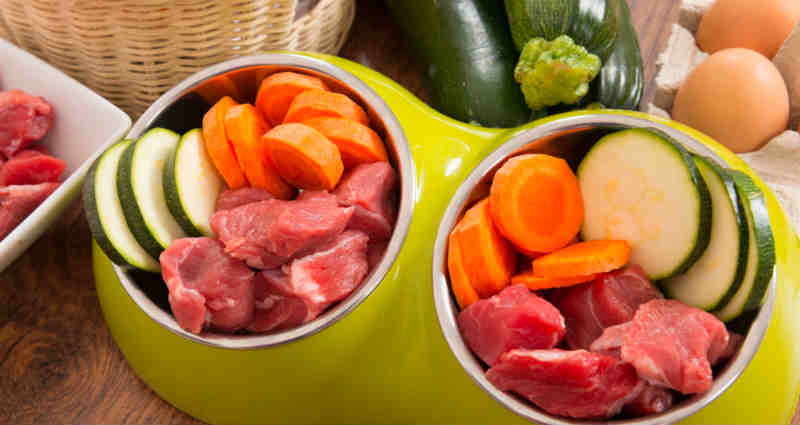



How do you get a dog to switch to the BARF raw food diet for dogs? There are some strategies you can use to switch over to the Biologically Appropriate Raw Food (also called the Bones And Raw Food) method.
Many dog owners were able to find an improvement in the vitality of their animal best friend when they switched from ready-made food to BARF nutrition. Many a veterinarian knows the advantages of the feeding concept with raw meat and vegetables. However, since not every dog can tolerate the type of nutrition in every situation, the veterinary experts advise that a thorough examination of the animal be carried out beforehand.
The preliminary medical examination is, however, only the first step to be taken into account for a dog-friendly change of feed to barf. In the following section, we will go deeper into the switch to BARF.
How to choose the best dog food
Switch to BARF raw food diet in young and healthy dogs
The switch to “organic, raw feed” is relatively easy for young and healthy animals and can be almost seamlessly linked to the previous feeding style. Many experienced bartenders even advise against slowly creeping out the old food in healthy animals, since the different digestion times and processes can unnecessarily and massively strain the dog’s gastrointestinal tract.
The day of fasting should start with the new diet. This ensures that the animal’s digestive tract is completely free of any dry feed and feed mixture residues and can therefore fully adapt to the new digestive requirements. The feeling of hunger that arises in this way can also help the dog to accept the rather strange and initially still new food.
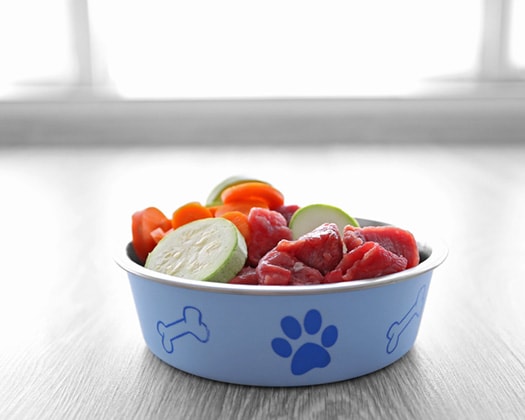
As the first BARF meal, which should consist of 2-3 small meals spread throughout the day, we recommend muscle meat, for example from beef or lamb, and an easily digestible vegetable, for example pureed carrots. If you want to add bones directly at the start of the switch to BARF, then soft skeletons such as chicken wings or necks should be used.
What to do if the dog does not eat the BARF food?
If the dog does not accept the meal directly, it does not mean despair and show patience. Let the food stand for 5 minutes and then remove it again to offer it to your dog again about 5 hours later. This procedure requires stamina, but don’t worry: 2-3 days without eating will not harm dogs.
If the food is still refused, the meat can easily be seared and / or some meat juice or chicken broth can be added. These measures mostly increase appetite. If you are successful, gradually balance out the small helping steps. After about a week without any side effects, you can start to try and add more types of meat and vegetables. Offal can also be gradually added to the menu.
Even in puppy age, dogs can be used to raw feeding. However, Lent should not be as long as in adult dogs. It is enough to skip just one meal. If, for example, the puppy received a meal from the breeder in the morning, the lunch of the newcomer at home is simply skipped and the first BARF feeding is started in the evening.
Switching to BARF raw food diet in older or sick dogs
A somewhat more sensitive approach is to change the feed in the direction of BARF in older and sick animals. The raw feeding should be particularly low in fat and easily digestible. For some seniors and chronically ill animals, it has also proven helpful to feed the meat cooked and to blanch the vegetables.
Due to the age of the animals and the associated many years of getting used to ready-made feed mixtures, the addition of special enzymes and intestinal treatments can also be considered to help the dog with the digestion. You can have these prescribed by veterinarians.
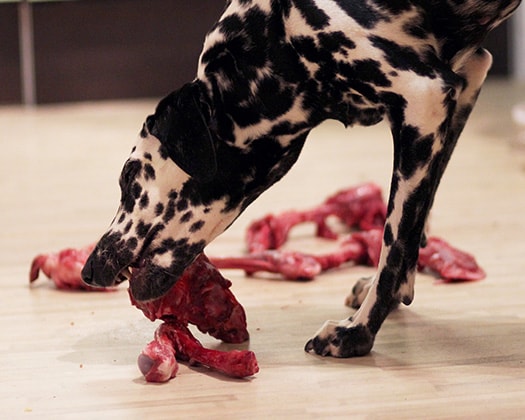
Apart from the special features already mentioned, the BARF range for older animals largely corresponds to that of healthy animals. However, there are two points to keep in mind: due to the reduced saliva flow and the partially worn teeth, the chunks of meat should be slightly smaller and the amount of bone should always be small. It is difficult for the dog to shred them and since he is more prone to constipation at an older age, they should be replaced by more meat, fats and offal.
Some dogs are allergic to certain types of meat (e.g. beef) in finished food. To find out whether fresh meat also leads to an allergic reaction, a so-called exclusion diet is recommended. Meat types that have been eaten rarely or never by the dog are fed over several weeks in connection with a vegetable variety. Horse, ostrich or kangaroo meat are good examples.
Start with one type of meat and add the vegetables after about 3-5 weeks – unless the dog develops any new allergy symptoms. After about ten days, another rare type of meat can be added over 3-5 weeks or even continued with the first one. If the animal still shows no signs can be switched back to the supposed allergy types. In many cases there are no allergic reactions after this trial period and it turns out that the animal is more likely to react to other ingredients than the meat in the finished or dry feed.
Unpleasant side effects when changing feed
The years of getting used to the dog’s stomach on industrially manufactured feed can cause various side effects when switching to BARF feeding. These include diarrhea, mucus in the feces, vomiting, constipation or itching, which according to experienced barfer can be attributed to the completely new food structure. It is therefore not absolutely necessary to cancel the change in diet.
Nevertheless, keep an eye on your animal during this time and always consult your veterinarian so that your protégé gets through this time as well as possible. In addition, many bartenders report rashes, hair loss and dandruff that appeared in their animals at the same time as the feed change, but disappeared again after a certain period of familiarization.
If this is not the case for your four-legged friend after a maximum of four weeks, you should definitely see a doctor. Another point that worries many dog owners is the changing drinking behavior of the dog, which can decrease significantly. But this is also considered normal, because the dog automatically ingests much more liquid than it does with dry food.
