




What are the best ways to stop children getting carsick when they travel? Our guide outlines some preventions and some cures to make the trip better.
According to statistics, children from 2 to 12 years of age usually experience car sickness. You can find out what is causing this and what you can do about it here.
Everything is ready for the trip, the journey can begin and the children are in a good mood. Nothing much can actually happen now, but after a short time you don’t hear much from a child. It is very calm, pale and cold sweaty. A short time later, it vomits. The child has motion sickness, which usually occurs in children from the age of 3. The symptoms are very typical, which is why you can see it in your child before the first vomiting. Take care of the following:
- Constant yawning
- fatigue
- Increased salivation
- Cold sweat
- a headache
- nausea
- Vomit
- dizziness
- Facial pallor
- Fast heartbeat
- Rapid breathing
Causes of car sickness
Of course, the travel sickness can also occur because of all the excitement, whereby it then manifests itself more in vomiting and has nothing to do with travel sickness itself. In fact, it is due to the organ of balance and the movement in which you find yourself during the journey.
The inner ear, joints, muscles and eyes send the wrong signals to the brain while driving or flying. The eyes may be on a book and tell the brain that there is a standstill. The inner ear has the equilibrium organ and this tells the brain that the vehicle is moving. The result – the brain gets confused because it receives two pieces of information that do not match. Now many reactions are sent to the nervous system and the body overreacts – the above symptoms appear.
How to stop children sucking their thumbs
Ways to stop children getting carsick
If you already know that your child suffers from travel sickness, it is advisable to prevent it right away. Your child does not have to suffer that way and it is also more pleasant for the parents.
| measure | Explanation |
|---|---|
| Break up at night | The balance organ does not work while the child is sleeping. The child can sleep through most of the journey. |
| Take regular breaks | Breathing fresh air during the breaks stimulates the circulation. The brain can calm down again due to the standstill. |
| Give light snacks | When the stomach is busy, it cannot rebel either. However, the snacks should be small and light, like fruit or pretzel sticks. |
| deflection | An audio book or singing songs with the child distracts and the nausea is forgotten. |
| Keep an eye on the horizon | If the child can look forward to the street, the nausea usually subsides. |
| Choose a seat on the wing | When traveling by air, a seat on the wing is ideal because the movements are minimal. |
Treat travel sickness with medication
You can speak to the pediatrician before you travel. This can advise you on homeopathic remedies that can reduce travel sickness somewhat. There are also special chewing gums in the pharmacy against travel sickness. However, these should only be measures if your child suffers from it severely.
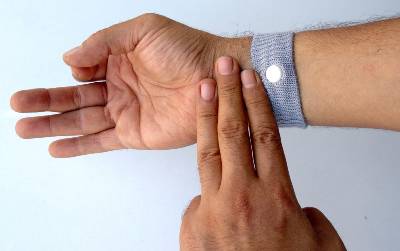
Acupressure also helps very well. There is a special acupressure point called the Nei Kuan (or Nei Guan) point … It is three fingers wide on the inside of both wrists. You can also get bracelets from the pharmacy that stimulate this point during the trip. Simply ask your doctor or pharmacist for advice.
