
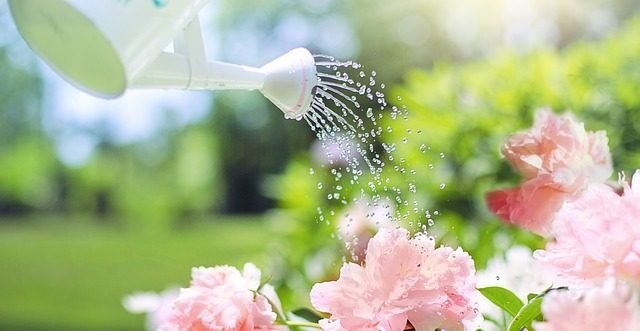



Water is a precious commodity, especially in the hot season. In order to waste as little as possible, it should be used as efficiently as possible. With these 20 tips you save the environment and your wallet when you save water in the garden!
1. Save water in the garden: only pour on a little
If the soil in the flower pot is very dry, it will hardly take up water. Result: The water simply runs through, without the earth being moistened. For this reason, pour only a little so that the surface is moistened and water thoroughly a few minutes later.
2. Prune more often
Garden soil is criss-crossed by fine canals, called capillaries, through which moisture evaporates, especially in warm weather. In order to prevent this, one chops the soil after each casting superficially, for example with a flat hoe. Thus, the capillaries are interrupted, which makes evaporation difficult.
3. Water in the morning or at night
The warmer the air, the faster water evaporates from the soil and plants. Therefore, you should never pour during the day – it would simply be too little water at the roots. The best times to save water in the garden are the early morning hours; The plants then absorb the water well and survive the following sunny hours well. If there is no other way, you can also water in the evening. The moist earth, however, is an invitation to the snails! An exception are potted plants on the balcony, where there are no snails: they recover best after being watered overnight.
4. Save water in the garden: Mulching
Bare soil exposed to the sun is drying out easily. Therefore you should cover free surfaces with mulch after casting. This keeps the moisture in the soil longer.
5. Leave the lawn longer
The shorter the lawn is cut, the more exposed it is to the sun. Therefore, during hot, dry periods it is allowed to be longer than usual because the soil is so better shaded and the grasses have more leaf mass to complete the necessary metabolism.
6. Water the earth
Plants absorb moisture mainly through their roots and therefore you should always pour directly on the ground. When watering with the lawn sprinkler or the spray hose much moisture evaporates in the air before it reaches the plants. In addition, water droplets on the leaves act like magnifying glasses, which can burn the tissue; Flowers often become spotty and unsightly when wet.
7. Plastic instead of clay
Clay pots are beautiful, but the porous material evaporates a lot of water. Different plastic pots: Here, the water remains in the soil until the plant has absorbed everything. To prevent the risk of waterlogging during prolonged periods of rain, the pots must be placed on bucket feet.
8. Water storage
Some flower pots and boxes are equipped with a water tank. It is a cavity on the ground where a pool of water can accumulate. It is separated from the actual planting room by a perforated plate. When the soil dries, it absorbs moisture from below. Virtually no water can evaporate unused in these systems.
9. Good earth
Clay and humus are able to store moisture. In order to improve the water storage capacity of the soil, it must be regularly supplied with compost or humus. Sandy soil must also be made more cohesive with clay flour, otherwise water runs off so quickly that hardly anything gets to the plant roots.
10. Automatic watering
Irrigation computers make casting much easier. But they should be used in conjunction with a humidity sensor, so that is not watered when the soil is already wet enough from the rain.
11. Water rarely but penetrating
Plants need a deep root system to survive dry seasons, because in depth, moisture stays much longer than it does on the surface. But they do not develop that, if it is often, but only superficially poured, and only the topmost layer of earth is damp. The roots grow into this layer and dry up quickly when the watering times fail.
12. Set the sprinkler correctly
Lawns can only be properly watered with sprinklers . But they should be set so precisely that not even terrace and garden paths get wet.
13. Cool lawn in the morning
Part of the water already evaporates before it reaches the ground. The warmer it is, the more moisture it absorbs. It is therefore better to water the lawn in the cool hours of the day.
14. Provide wind protection
Not only the sun, wind also dries out plants and soil. Even a low edging hedge or a series of tall perennials can help.
15. Form the irrigation trough
To water plants in a very targeted way, form a hollow over the root area and pour into it. The water does not run all over the bed in this way, but slowly seeps into the ground exactly where it is needed.
16. Dig in the clay pot
An alternative to the pouring trough are clay pots, which are lowered between the plants in the soil. The pots are filled with water and slowly release the moisture into the deeper soil layers.
17. Plant on overcast days
During planting and all major earthworks, moist soil reaches the surface from deep, where it dries quickly on sunny days, and dry soil from above is layered in depth. So that the moisture is retained, should only be planted or dug on covered, rainy days as possible.
18. Remove Weeds
Plants compete with each other for water and nutrients. So that the desired are sufficiently supplied, the unwanted ones are regularly weeded. Then mulch to suppress weed growth.
19. Shade the ground
Well shaded soil keeps the moisture longer than uncovered. Good shade donors are low large-leaved plants such as Bergenia or Funkien.
20. The right base
For every soil there are plants that can cope with the existing conditions. In a garden with sandy soil, therefore, especially plants that tolerate much drought.
 Gerhardt Richter is a writer and a trainer at trade technical colleges, specializing in carpentry, plumbing, mechanics and construction.
