


Complete guide on how to prepare asparagus outlines how to tell fresh from stale, storing, when to peel which type, and cooking recipes and tips.
CONTENTS
Overview and history
Buying asparagus
Storing asparagus
How to prepare asparagus: purple
How to prepare asparagus: white
How to prepare asparagus: green
Recipe: Make a soup from asparagus stock
Easy asparagus risotto recipe
Overview and history
During the asparagus season we love to eat these delicious vegetables every day. In order for the asparagus to taste good, it has to be prepared correctly.
The Egyptians valued asparagus (botanic name Asparagus officinalis) 5000 years ago and the Greek doctor Hippocrates knew about its medicinal properties. The Romans began cultivating asparagus in 234 BC, but it wasn’t until the 16th century that asparagus finally came to all of Europe. The first cultivation areas did not appear until a century later.
Today, asparagus is one of the most popular and sought-after vegetables worldwide.
In addition, asparagus is extremely healthy and contains important vitamins as well as calcium and potassium. Asparagus is not only healthy and tasty, it also counts as a natural fat burner Eating asparagus is a pleasure without regrets, because 100g asparagus have just 20 calories.
How to prepare brussels sprouts
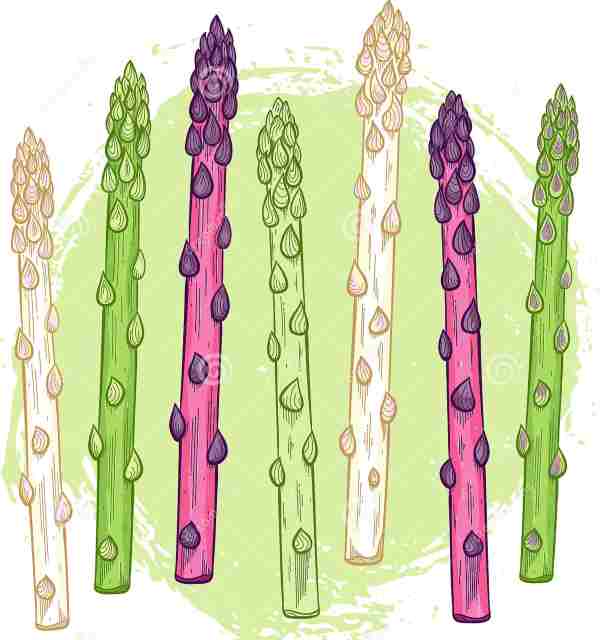
There are mainly 3 types available:
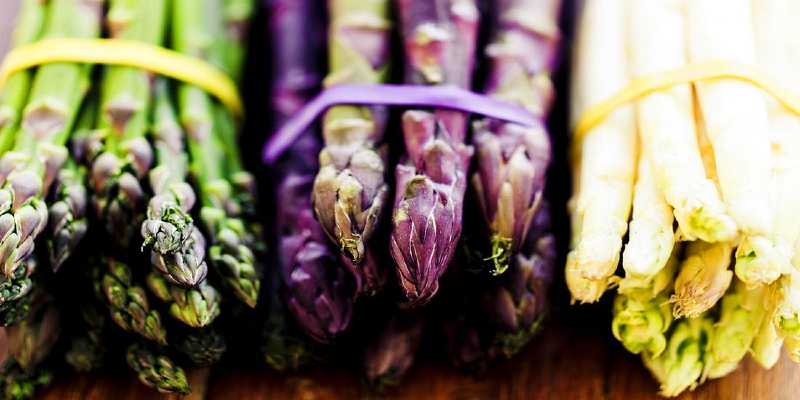
- White asparagus – the aroma is particularly mild and delicate.
- Purple asparagus – has a fine, somewhat stronger and spicy aroma.
- Green asparagus – has a hearty, spicy and strong aroma. The stems are also thinner and only the lower third needs to be peeled or trimmed off.
Green asparagus grows above ground and therefore only needs to be peeled in the lower third. White asparagus grows underground and remains white due to the lack of sunlight.
Buying asparagus
You can recognize fresh asparagus by the juicy cut surfaces, firm heads and by its aromatic smell (should smell pleasant and not sour). The stems shouldn’t be pliable and if you squeeze the cut end, juice should come out. If you rub the asparagus spears together they should squeak
Storing asparagus
- Unpeeled asparagus should be taken out of the packaging and wrapped in a damp cloth. So it can be kept for 3-4 days in the vegetable drawer. If you wrap white asparagus in a damp cloth and then place it in the vegetable drawer, it will hold up best.
- For a particularly long shelf life, green asparagus should be placed with the lower third in the water and then stored in the refrigerator, however if it sits in water for a long time, it starts to lose its flavour.
- Peeled asparagus should be wrapped in cling film. So you can keep it in the refrigerator for 1-2 days.
- A little tip: peeled asparagus will keep in the freezer for around 6 months. Then it can simply be added to the boiling water without defrosting .
How to prepare asparagus: purple
- To remove any sand residue from the fresh asparagus, it must be washed under running water and then drained well.
- Asparagus is always peeled from top to bottom , i.e. from the head to the end of the cut. It is important that it is peeled evenly and not too thinly and that the head end ( head of asparagus) is not peeled.
- The skin of the green asparagus is thinner and does not need to be peeled.
- After peeling, the woody cut end (approx. 1-3 cm) is cut off (also with green asparagus). You can also make is ‘snap’ at the right spot automatically.
- In order to be able to portion the asparagus better, it makes sense to bundle it with kitchen twine before cooking. Bundles of approx. 500 g are always ideal.
- Asparagus can be cooked lying down in a normal pot, but also standing up in a special asparagus pot. With an asparagus cooking pot, it is sufficient if the water only reaches half of the asparagus stalks, the upper part of the asparagus stalks being steamed.
- When the water boils, add a teaspoon of salt , a teaspoon of butter , a teaspoon of sugar (to soften bitter substances) and a splash of lemon juice (for the color) into the water and reduce the heat.
- The cooking time of asparagus depends on the one hand on personal taste and on the other hand on the diameter of the sticks. 10-20 minutes are ideal for white asparagus and 8-15 minutes for thinner green asparagus .
Tip: To check whether the asparagus is ready, you can also do a cooking test . Prick the lower, thick end of the asparagus with a knife. If it is already soft there, with a slight resistance, the asparagus is ready.
How to prepare asparagus: white
- First you need to peel the white asparagus completely (except for the heads). Because even if you cook the asparagus peel longer, it won’t get soft.
- Next, put the asparagus spears in a large saucepan or pan of boiling water. It is important that the bars are completely covered with water.
- Add two teaspoons of salt and a pinch of sugar to about a kilo of asparagus . The sugar softens possible bitter substances. You can also add a slice of organic lemon. This ensures a slightly fresher taste and makes the white asparagus shine.
- Briefly boil the asparagus once, then leave it on low heat. How long depends on the thickness of the asparagus spears. A rule of thumb:
- Very thick: cook for ten to 15 minutes
- thick: cook for eight to ten minutes
Cooking test : If you lift the asparagus spears with a fork, they will bend downwards. Depending on whether you want the asparagus to be soft or al dente, they should bend more or less. If you want to be absolutely sure, you can pierce the ends of the asparagus spear with a knife – the asparagus tastes best when it is soft and yet has resistance.
Tip: Asparagus works particularly well in an asparagus pot . Put the asparagus spears in upright so you can cook them standing up. However, this does not change the cooking time. The preparation in a steamer is particularly gentle. At 100 degrees Celsius, the asparagus spears also need between ten and 15 minutes.
How to prepare asparagus: green
- After peeling the bottom part, and snapping off or trimming off the woody part, you should also add two teaspoons of salt , a pinch of sugar and a slice of organic lemon to the cooking water and cook the asparagus spears over low heat.
- Green asparagus is ready in six to eight minutes. If you have very thin sticks, they can be done in just five minutes.
- Avoid boiling green asparagus in water for too long. Otherwise the head of asparagus will quickly become mushy.
- You can also find out whether the asparagus are ready with the green asparagus with the fork sample or by piercing it (see white asparagus).
Recipe: Make a soup from asparagus stock
When the asparagus is ready, the asparagus water is left over. You can use it to make a delicious asparagus soup instead of throwing away the brew. You need the following ingredients per liter of asparagus water:
- 200 ml organic cream,
- 2 tbsp butter or margarine,
- 2 tbsp organic flour,
- some salt, pepper and fresh chives.
Preparation:
- Put the butter or margarine in a saucepan and heat it up.
- Next, you fill some flour into the pot and verrührst it with the melted butter, so that a roux is formed.
- Mix the finished roux with the asparagus water and the cream.
- If the soup is too runny, tie the soup with a little flour dissolved in water.
- Then just bring to the boil and season with salt and pepper.
Easy asparagus risotto recipe

For asparagus risotto, you can use white and green asparagus – whichever you prefer. You can also combine the two types, as in our recipe. You will need these ingredients for two servings of asparagus risotto:
- 250 g white asparagus
- 250 g green asparagus
- 2 shallots
- 150 g risotto rice
- 3 tbsp butter
- 100 ml white wine
- 500 ml vegetable broth
- Sugar, salt and pepper
- the juice of half a lemon
- a couple of walnut kernels
- 80 g parmesan cheese
Tip: If you only want to use one type of asparagus, just use 500 grams of the preferred variant.
- First you wash and peel the asparagus. You peel white asparagus completely, with green asparagus only the bottom centimeters. You should cut off any woody ends.
- Cut the asparagus into pieces about three inches long. You shouldn’t throw away the remaining skin of the asparagus. Instead, you can make an asparagus soup out of peelings.
- Put about 500 milliliters of water in a saucepan and add some sugar. Let the mixture boil, then add the asparagus pieces. Let it simmer over low heat for about ten minutes. Then drain well.
- Peel and dice the shallots. Heat some butter in a saucepan and sauté it until translucent. Add the risotto rice and steam it translucent too. But be careful: it shouldn’t get brown.
- Pour the white wine into the pot and stir well until it has completely evaporated. Now gradually add a little vegetable broth so that the rice is always barely covered. All of this takes about 20 to 25 minutes. In the meantime, you should always stir well so that nothing burns. The asparagus risotto should have a creamy consistency in the end and not be too runny. So if you don’t use up all of the vegetable stock, that’s no problem.
- When the risotto has reached the desired consistency, add the asparagus pieces, a tablespoon of butter, the juice of half a lemon and about 50 grams of grated Parmesan.
- Season with salt and pepper and carefully stir the asparagus risotto. Divide it between two plates and garnish with the rest of the parmesan and walnuts.
Tip: You can roast the walnuts in the pan for a few minutes beforehand.
