
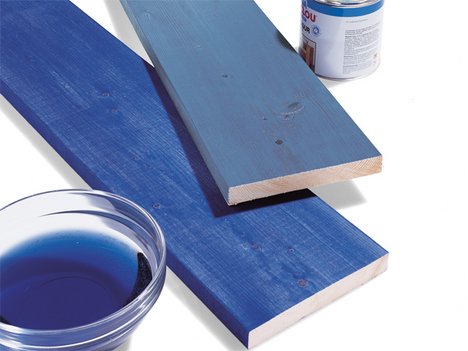



Glazes are faster to process than stains, and they also need no further surface protection by varnish or special wood oils. We will show you how, and why to glaze wood properly.
How to improve the surface of furniture with glaze: For untreated wood sand and clean the surface as described. Then coat the wood with a first glaze coating and let it dry. Then grind the surface again with a fine sandpaper. The second cover with a special furniture shave ensures beautiful shine without covering the wood grain. Guide the brush with long strokes parallel to the wood grain – this results in a uniform surface.
Note: Glaze is often thin and can “run away” quickly. Stick masking tape wherever adjacent parts need to be protected. As soon as the glaze has dried, remove the masking tape. And: The intrinsic color of the wood influences the final color, so make a sample.
Glazes are the fast method, so to speak. Anyone who has found the desired color on the color shelf is already on the home stretch. However, if you want a color outside the manufacturer’s color palette, it’s already harder.
Although it is possible to mix glazes from the same manufacturer, this has not been proven in practice because it is difficult to hit the right note and because it is a costly job, especially if it has not been hit. However, you can increase the degree of coloring of the wood by repainting several times.
How to bend wood with steam, water or fire
Which glaze?
It is easiest to use a glaze from your top coat, so use gloss if you want a glossy finish or semi-gloss if you want a flatter finish. Acrylic glaze is used so you can dye it yourself. If you are working on large parts of normal furniture, you can use an acrylic “clear coat” or a water-based urethane (do not mix water-based with oil-based).
If you are trying to adjust an existing finish for repairs, check what type of coating is on your piece before using glaze coatings. You may need to adjust your choice of materials to work with existing surfaces (traditional shellac,
Optionally test the glaze on a piece of wood
Before you paint the glaze on the wood itself, it may be a good idea to test it on a piece of wood lying around, especially if it resembles the wood you are using for your project. Glazes (like almost all pigments) can look slightly different in liquid form than when painted on a surface. If you take the time to test, you can save the headache if you later remove it from your project, if it is not quite right.
If necessary, you can always test the glaze on a part of the project that is not easily visible (like a small area on a back corner).
Glaze wood properly: steps
Sand wood. The wooden surfaces are first sanded with sandpaper with a grain size of at least 180, better 240 in the direction of the grain. Subsequently, the resulting sanding dust is removed without residue.
 Gerhardt Richter is a writer and a trainer at trade technical colleges, specializing in carpentry, plumbing, mechanics and construction.
