
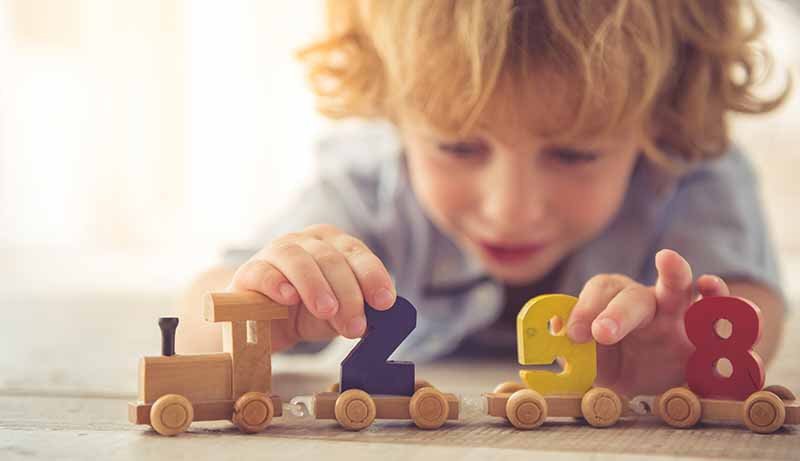


Wooden toys are durable and are sometimes passed down from generation to generation, and this means you have to clean wooden toys properly. Over time, the toy inevitably comes into contact with germs and bacteria.
It often lands on the floor, is felt extensively by children’s hands and put into the mouth during the oral phase. Even if the wood contains tannins that provide a natural antibacterial effect, after a certain period of use the question arises: How can wooden toys be cleaned properly? Here are some tips at a glance.
Cleaning wooden toys properly is easy if the following rules are observed: Even if the surface of the much-loved wooden horse is littered with dried food leftovers or the stacking tower with which you played as a child has dark discoloration everywhere – wooden toys should never be cleaned in the dishwasher! Wood is a natural material that swells up in contact with water and loses its original shape.
How to make wooden toys easily
Clean wooden toys properly
Instead, cleaning with lukewarm water, which is accompanied by a heavily diluted vinegar or a splash of ecological detergent is optimal and material-friendly. With a rag or sponge, which should be new and unused, the surface is then gently rubbed off.
In the case of untreated wooden toys, heavily soiled, uneven or brittle areas can also be smeared. The best way to clean wooden toys is to use sandpaper with grain size 100. After cleaning, the toy is rubbed with a cotton cloth and, if possible, dried in the sun.
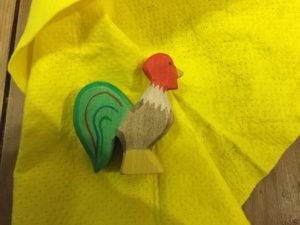
Do not clean wooden toys in a water bath
Even painted toys, the surface of which is less sensitive, should not be cleaned in the dishwasher or in the water bath. From a hygienic point of view, just like with untreated wood, it is perfectly sufficient to wipe the surface with rinsing or vinegar water.
In the case of heavy impurities, instead of sanding paper, it is recommended that the paint would necessarily rub along to use a coarser sponge (not made of steel). As a rule, most dirt can be easily removed.
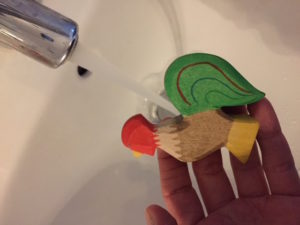
Never disinfect wooden toys!
The use of disinfectants on wood surfaces is not recommended. Although many parents are concerned that germs in the material will survive after periods of illness or that the child may become infected with diseases through joint use of toys, aggressive disinfection by commercial means or the use of alcohol in case of doubt is more likely to harm than use.
On the one hand, the material is strongly attacked as a result. On the other hand, especially if the children often put the toys in their mouths, there is a risk that residues of the disinfectant will reach the mucous membranes. Studies have also shown that wooden toys are inherently more hygienic than plastic toys.
Wood from some particular trees, such as pine, oak or larch, has been shown to contain anti-germ-inhibiting agents. This is due to hygroscopic, i.e. moisture-enhancing, properties of certain ingredients such as polyphenols, which can inhibit the growth of bacteria.
If the wooden toy is also gently cleaned every few months in the procedure described at the beginning, nothing stands in the way of a carefree and healthy play time!
