
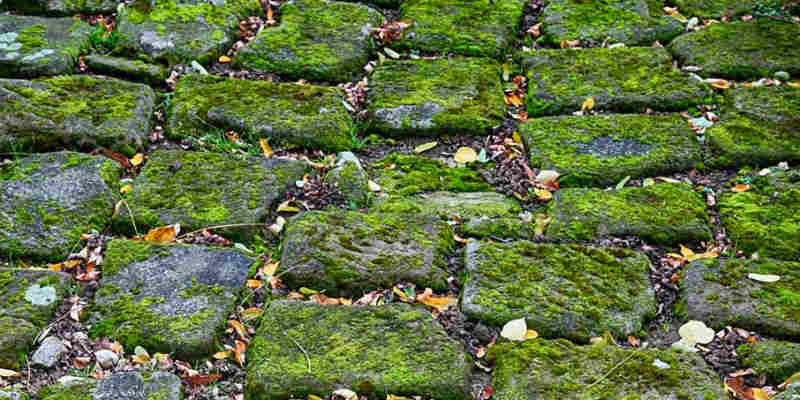


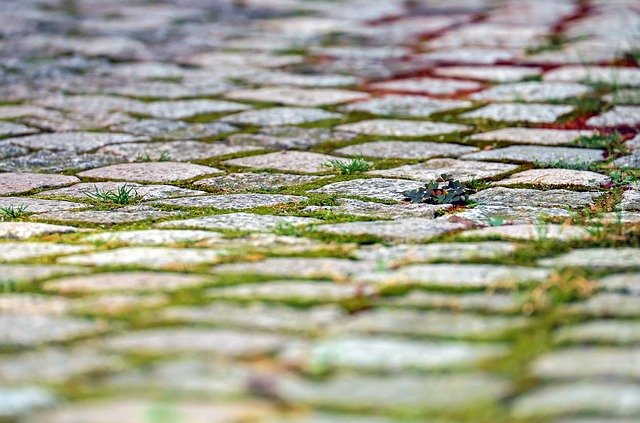
Not only flowerbeds, flowers and lawns need care, but also the garden furniture and garden paths should be cleaned regularly. Paving stones have the disadvantage that they not only quickly take on dirt, but it grows in the spaces between the paving stones quickly with weeds and moss — and that does not look good. If you want to clean paving stones the green way and get rid of mosses and algae, there are environmentally friendly methods.
Clean paving stones the green way: materials
- 10 liters of water
- Stable large cooking pot
- bucket
- Wooden spoon for stirring
- Calcined soda (sodium carbonate)
- or 20 grams of potassium permanganate
Clean paving stones with hot soda water – instructions in individual steps
- When using soda, heat about 10 liters of water in a saucepan and bring to a boil.
- Then pour the hot water, which is in the saucepan, in a sturdy bucket and then add 100 grams of soda.
- Immediately pour the mixture onto the paving stones and then spread evenly with a puller.
- The process should be repeated until the entire paving stones are covered with the mixture.
- Tip: It is important to remember that the procedure should not be used in the event of a downpour.
- After one or two days, the paving stones are clean and handsome again and free from algae and moss.
Thoroughly clean natural stone and concrete with potassium permanganate
If the paving stone is made of natural stone such as limestone, marble or granite, you must use a special natural stone cleaner such as potassium permanganate to clean the stone surface. Paving stones made of natural stone form a timeless elegance for their underground and are also weather-resistant and can withstand years.
- First you have to heat 10 liters of water until just before the boiling point. Then pour the hot water in a bucket and add 20 grams of potassium permanganate. Then mix well the powder with a wooden spoon.
- The liquid is finally poured over the paving stones. After cleaning the natural stone, water residues should by no means remain on the stone surface.
- The finish forms a surface seal.
- The respective methods gently remove green coverings, moss and algae.
- Tip: Occasionally, white patches form on the paving stones, which must then be removed urgently. This means that eg bird droppings with hot water and a coarse brush can be removed well. More difficult and expensive is the removal of oil stains. If the oil stains are still fresh, you can tie them with sand and then remove with a grease solvent. Older oil stains can be easily removed with a dishwasher tab, which is dissolved in a little water.
If you clean the paving stones at regular intervals (at least twice a year), then you can already prevent the weeds from spreading and causing extreme contamination.
How to lay paving stones in a driveway or terrace
How to build a garden path with stones
