
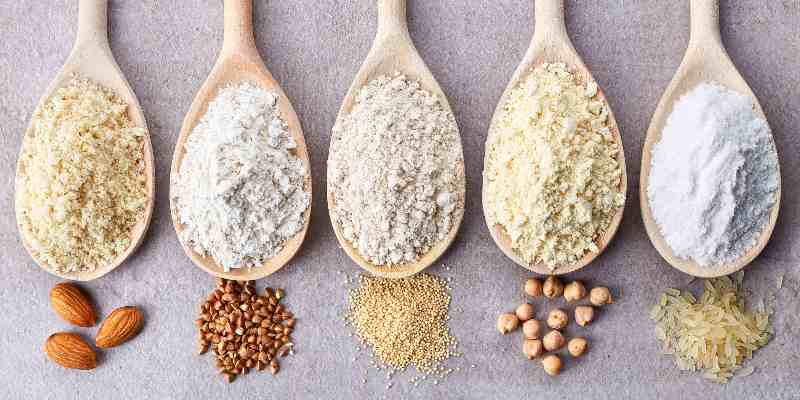



What are the best flour substitutes? Our guide outlines 10 alternatives and their properties, and what the best uses are for each. Plus some non-flour substitutes.
Find more food guides, tips and advice
Conventional flours are rich in carbohydrates and are also incompatible for many people due to the gluten. But what gluten-free alternatives are there?
When looking for alternatives to wheat flour, the choice often falls on rye flour or spelled flour. However, these flours are not suitable for a gluten-free diet or low carb.
In order to reduce the amount of carbohydrates in baked goods and to make the baked goods palatable to people with gluten intolerance, a full-fledged flour substitute is sought.
Best flour substitutes: 10 alternative
Coconut flour
Coconut flour is a full-fledged flour substitute and is also used in bakeries. The flour gives baked goods a characteristic taste. This is particularly recommended for fruit cakes. In combination with almond flour, tasty small baked goods are created, making it one of the best flour substitutes.
Tip: Coconut rape increases the taste of coconut flour.
Almond flour
Almond flour is also widely used as an alternative to wheat flour. Almond flour can not only be used in conjunction with sweet pastries and desiccated coconut – as described above. The slightly more intense brown variant is also very suitable for making bread and rolls.
White flour can be completely replaced by almond flour. If the pastry should appear light and airy, combining it with other flour alternatives is a good decision.
Tip: Heavily de-oiled almond flour is versatile and has fewer calories than white almond flour.
Flour made from nuts
Anyone who has already gained experience with almond flour can also try other nut flours. The processing is similar. Nut flour has a more intense taste and is therefore less flexible to use. It would also be suitable, for example, in recipes for wholemeal bread with nuts . Here you can easily replace the flour with nut flour.
If the nut taste is less intense, the flour can be mixed with other of the alternatives mentioned here. Cookies or the bases of nut tarts can be baked entirely with nut flour. For hearty baked goods such as rolls, bread and pizza crusts, only a small amount of nut flour is advisable. The rest of the flour should be more tasteless.
Tip: Walnut flour is the easiest to obtain and the most versatile.
Lupin flour
If the dough is to be loose and smooth, lupin flour is a good choice. Lupin flour from the lupin bean can help achieve the consistency you want. If it is mixed with other flour alternatives, the dough becomes airier.
Lupin flour can be used to create both sweet and savory pastries. Dishes that contain vegetable protein are upgraded. The aroma goes best with hearty baked goods. The proportion of lupin flour should not exceed 20 percent of the amount of flour used.
Tip: Lupin flour develops an intense aroma and can quickly leave a bitter aftertaste when used in larger quantities.
Soy flour
Soy flour also has its own taste that you have to like. If you don’t mind, soy flour can be used in a particularly versatile way. So that the taste does not dominate the sweet pastry, no more than 20 to 30 percent of the total flour mass should consist of soy flour.
Bread, rolls or pizza dough can preferably be prepared with soy flour. You are welcome to experiment here. If half of the dough consists of soy flour, tasty rolls can be made.
Warning: Soy contains phytoestrogens that are similar to estrogen and should therefore not be consumed in excess.
Flaxseed flour
Flaxseed flour is particularly rich in fiber and provides plenty of protein. The flour has swelling properties and can increase the volume of the dough. The addition is only advisable in small amounts. It is assumed that about ten grams per meal.
The hydrocyanic acid contained is largely lost during baking, but negative effects on the health of children or pregnant women are still conceivable.
Flaxseed flour is less suitable for sweet baked goods. The tart taste goes best with rolls or bread. The baking time should be extended a little if possible. This ensures that it no longer contains harmful hydrogen cyanide.
Tip: Flaxseed flour works well as a binding agent and can be used as an egg substitute in recipes.
Advantages and disadvantages of the substitutes
| Flour substitute | advantages | disadvantage |
|---|---|---|
| Almond flour | ✔ versatile ✔ can completely replace wheat flour ✔ rich in protein | ✘ high density of baked goods |
| Coconut flour | ✔ light ✔ loose ✔ pleasant taste | ✘ contains more sugar than almond flour ✘ no base flour |
| Flour made from nuts | ✔ pleasant taste ✔ rich in protein ✔ resembles flour in volume | ✘ Nut taste not always suitable ✘ high in energy |
| Lupine flour | ✔ makes the pond airy ✔ easy to process ✔ rich in protein | ✘ bitter in large quantities ✘ high sugar content ✘ no base flour |
| Soy flour | ✔ makes the part airy ✔ rich in protein ✔ versatile ✔ easy to process | ✘ Taste takes getting used to ✘ excessive consumption is not recommended |
| Flaxseed flour | ✔ low in calories ✔ high in fiber ✔ high in protein | ✘ can only be used in small quantities ✘ contains hydrocyanic acid |
Flour substitutes don’t have to be flour: 4 alternatives
Flour does not necessarily have to be replaced by flour. Only the consistency should be reminiscent of conventional flour. Here are some other lesser-known alternatives to classic flour.
Oatmeal
You can bake bread with oat flakes instead of flour. The recipe works best when the oatmeal is ground to it. Then a flour-like baking ingredient is created. Oat flakes can be exchanged 1: 1 with flour in the recipe.
Red lentils
If red lentils are ground, a sweet-tasting baking ingredient is created, which gives cakes and pastries a reddish color. Lentil flour is also recommended for hearty cuisine and can serve as a binding agent.
Chestnuts
Roasted chestnuts are not only popular at Christmas time. If they are ground, they can be used to replace traditional flour by a quarter. The sweet chestnut flour is particularly suitable for cakes and pastries. It is also possible to bind sauces. With baking recipes, it is important to increase the amount of liquid or just use one more egg.
Chickpeas
An interesting flour alternative can also be made from roasted chickpeas. The slightly nutty taste goes best with hearty dishes. Wheat flour can be replaced by chickpea flour up to 20 percent. If you want to switch completely to chickpea flour, about a quarter less is used than stated in the recipes for wheat flour.
What must be considered when baking with a flour substitute?
- As has already been made clear, most flour alternatives cannot simply be exchanged 1: 1 for wheat flour. It takes a bit of tact to achieve the right consistency.
- Ordinary flour contains large amounts of gluten. This allows flour to combine with water and produce the desired adhesive effect. To achieve this effect, a gluten substitute is necessary for flour alternatives.
- Agar Agar is known to vegans as a substitute for gelatin. The powder made from seaweed can be used like baking powder and added to the flour.
- Chia seeds can also be used to achieve a gel-like consistency. The ground seeds are mixed with hot water in a ratio of 1: 3. The resulting gel binds the dough.
Tip: Adding a gluten substitute increases the baking time by around five percent.
